03
Salt
Some of the springs come up brine, because the water has crossed a buried evaporite bed on its way down. What it took to turn that water into salt: thorn galleries, iron pans, a pipeline of pine trunks and a works drawn as a half circle.
Start here
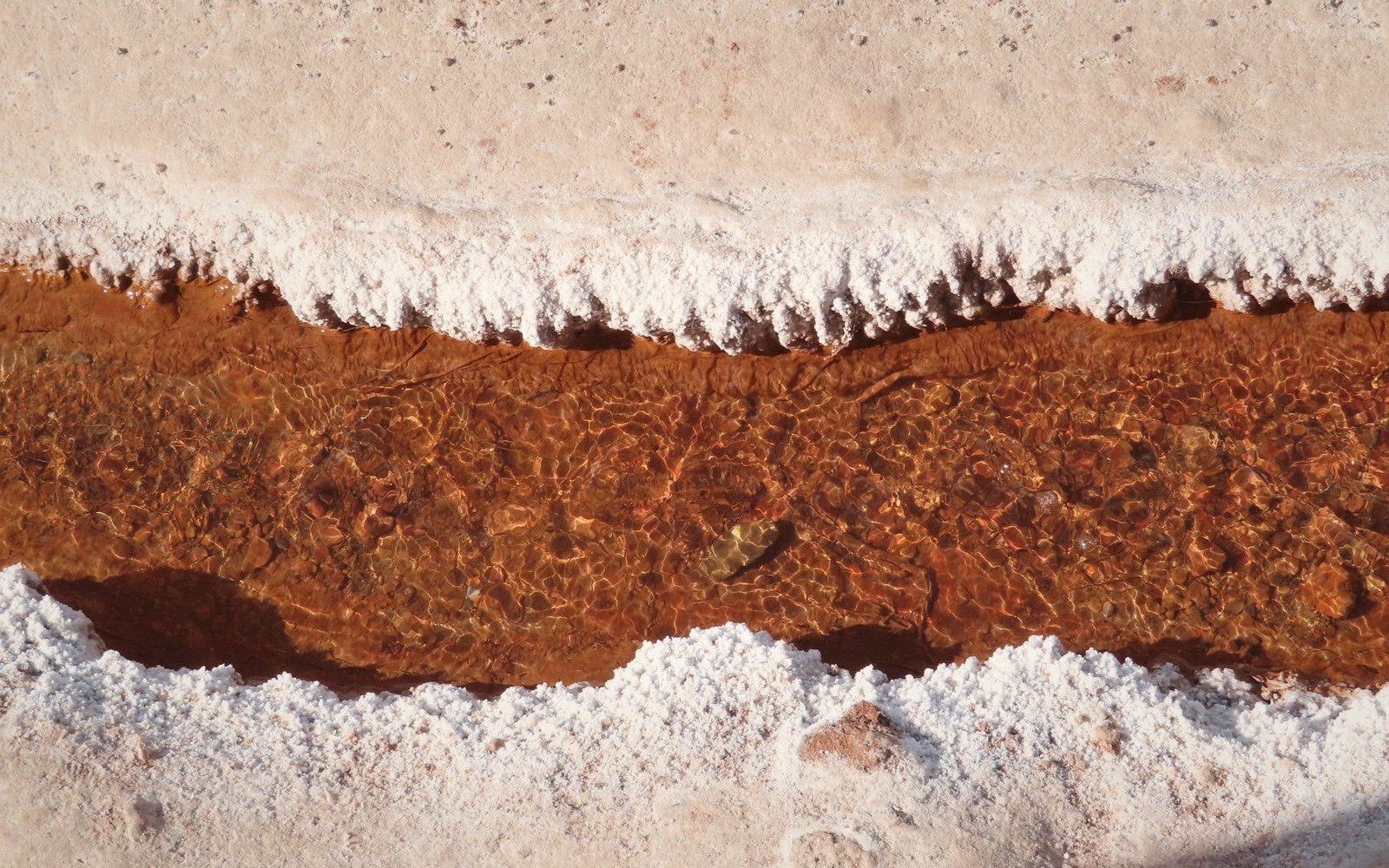
Brine comes up on its own
Some springs here are salt, because the water has crossed a buried evaporite bed. The industry existed because the resource surfaced itself.
Everything in Salt
- 3.1Into the pan
Brine comes up on its own
Some springs here are salt, because the water has crossed a buried evaporite bed. The industry existed because the resource surfaced itself.
- 3.2Into the pan
Boiling the pan
Shallow iron pans over fire, and the fuel that dominated the cost.
- 3.3Into the pan
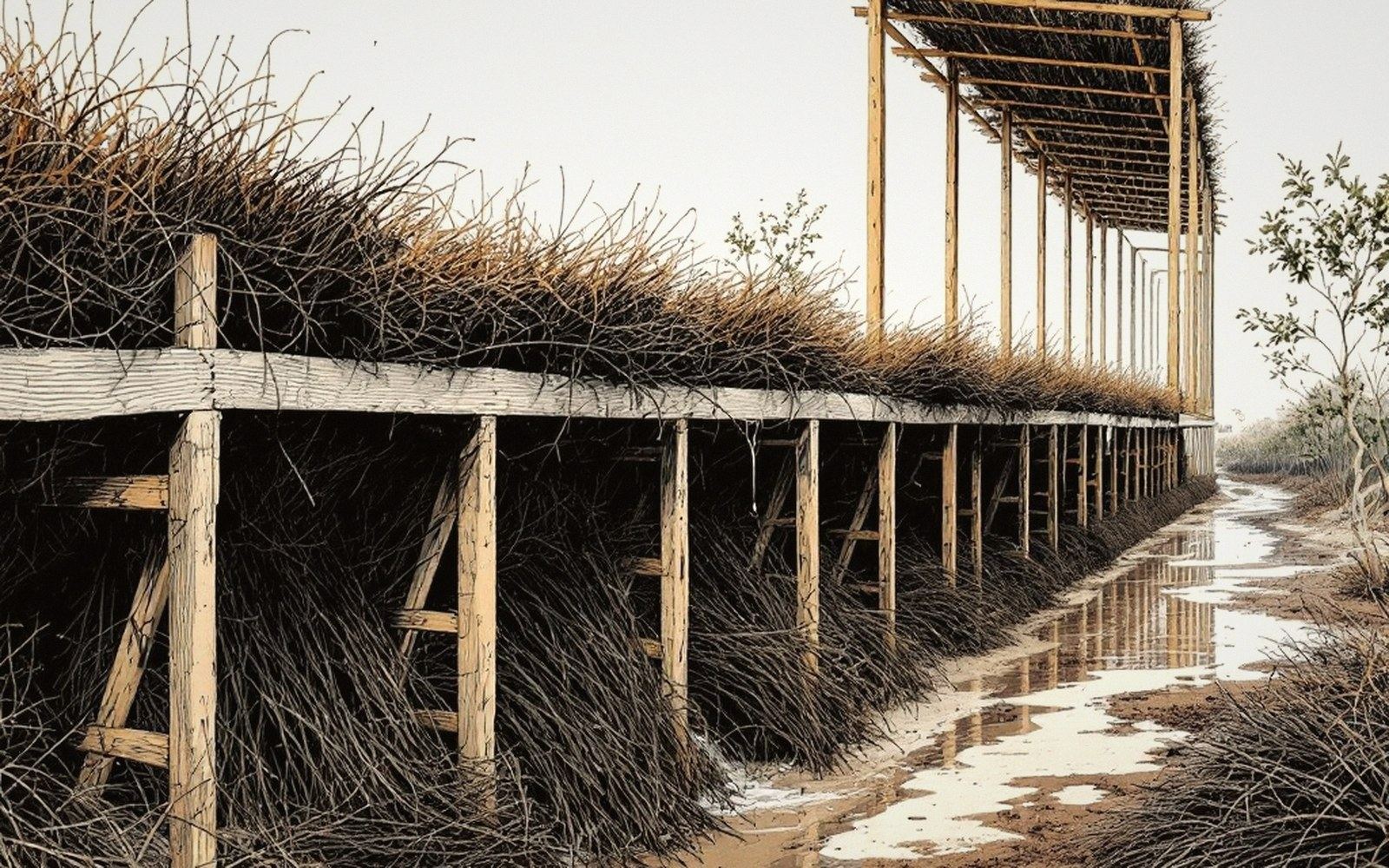
Graduation towers
Sheds packed with thorn bundles, trickling brine to concentrate it by evaporation before any fuel is burned.
- 3.4Into the pan
The half-circle plan
A saltworks laid out as a geometric arc — production organised as architecture.
- 3.5Into the pan
The brine pipeline
Moving the water to the fuel instead of the fuel to the water.
Elsewhere in the survey