Boiling the pan
Shallow iron pans over fire, and the fuel that dominated the cost.
Heat is the business
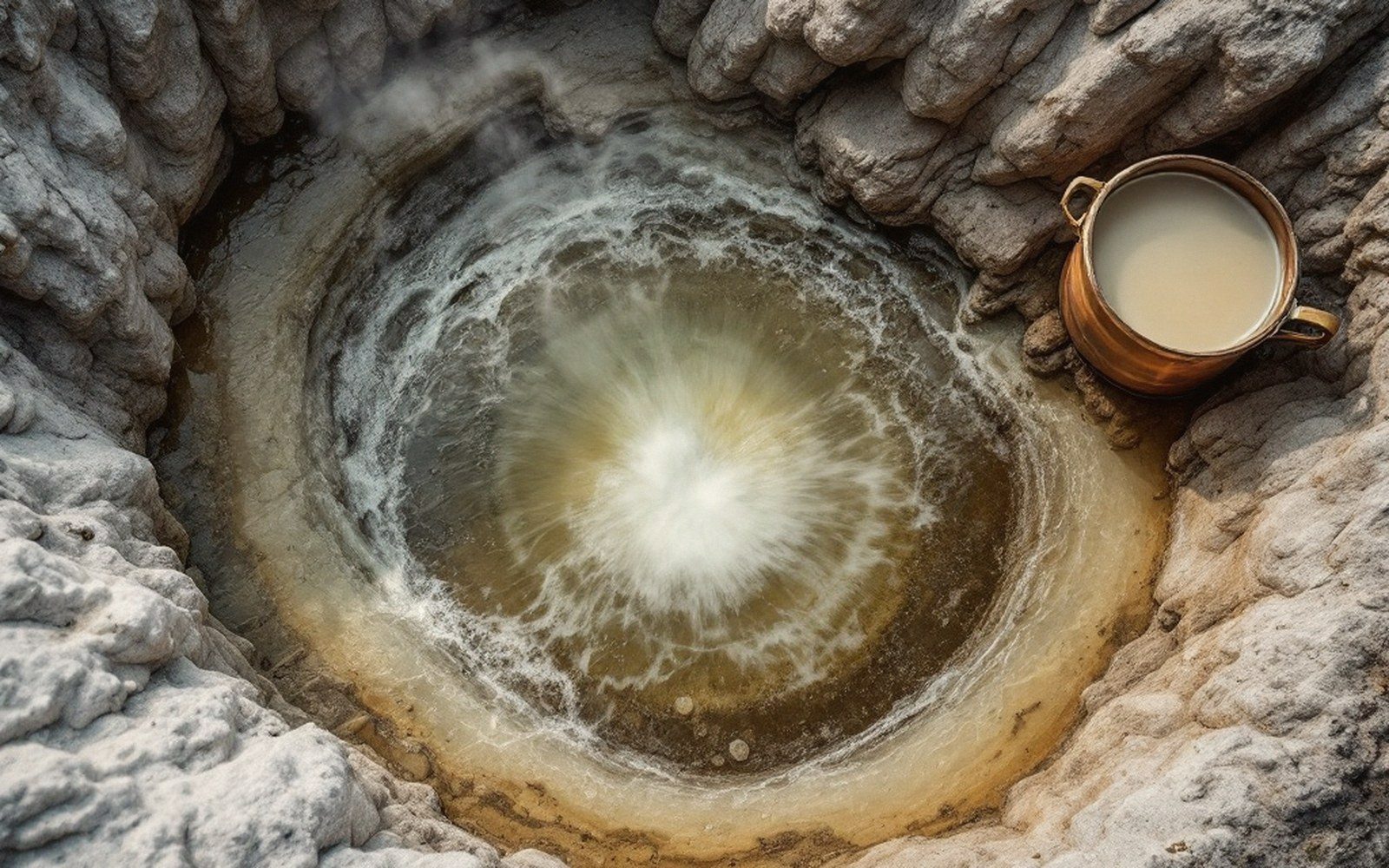
The chemistry of saltmaking is not complicated. Brine goes in, water leaves as steam, salt crystals remain. What the industry ran on — and what it nearly destroyed a region to sustain — was not ingenuity but fuel.
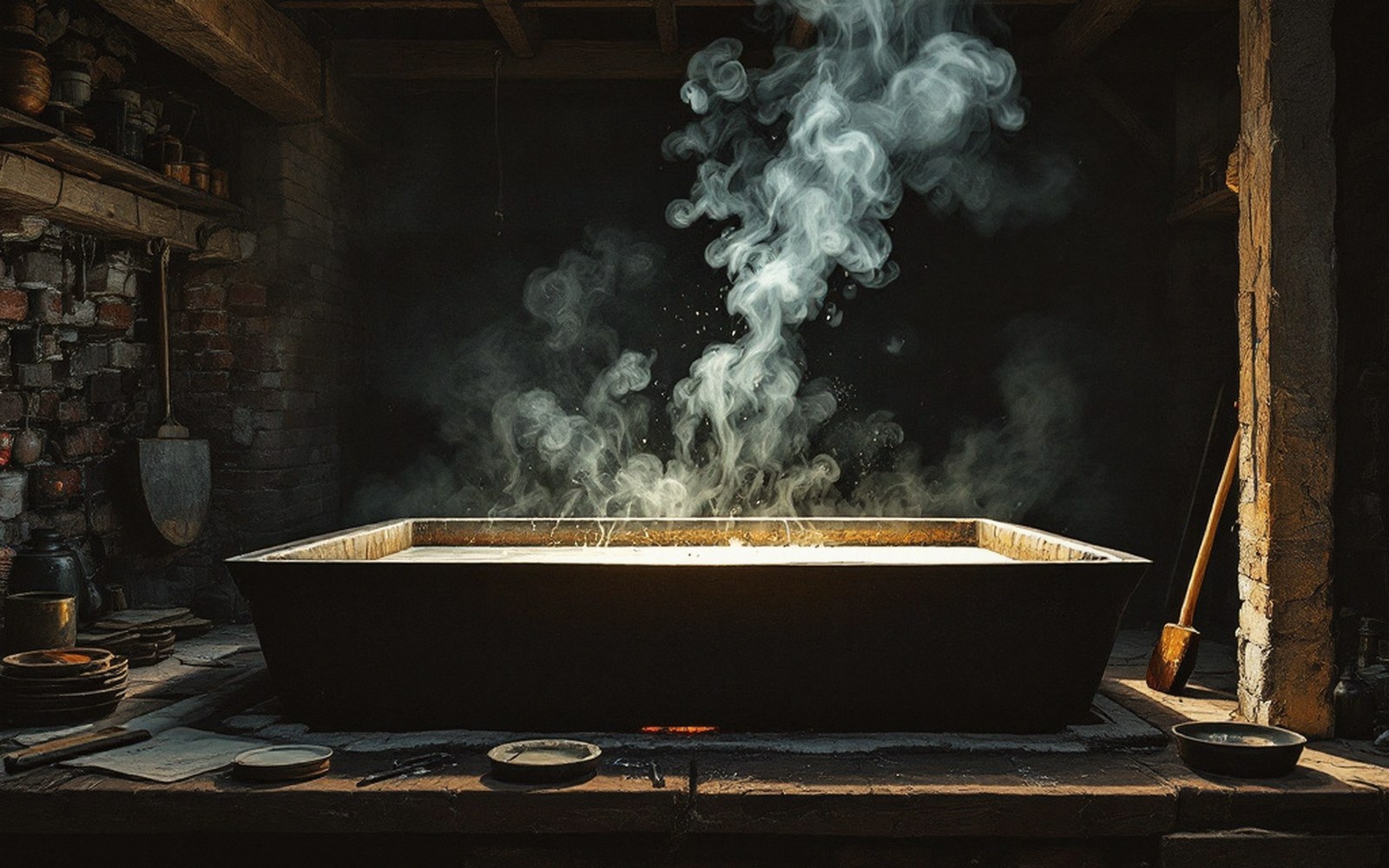
At the saltworks of Salins-les-Bains and Arc-et-Senans, the boiling vessel was a shallow iron pan, wide and relatively flat so that a large surface area faced the heat. Width mattered because salt crystallises at the surface as water evaporates; a deep narrow vessel would lose that advantage. The pans at the royal saltworks could be enormous — some measured many metres across — and they sat on low masonry arches above wood-fired furnaces that burned day and night in shifts, the fires never allowed to cool completely because reheating a pan cost more wood than maintaining temperature.
Field notes · Chronology
- Medieval periodsalt boiling at Salins-les-Bains already established
- 1770sArc-et-Senans royal saltworks completed; brine pipeline from Salins engineered
- Ongoingforest depletion a chronic constraint on production costs throughout the working life of both sites
That word, wood, is the economic heart of the story. Salt historians note that fuel regularly accounted for the majority of production costs, sometimes far outweighing the expense of labour or the maintenance of the buildings. The Jura and its surrounding forests were not incidental to the industry; they were the industry's other half. The Chaux forest to the north of Arc-et-Senans was allocated to the saltworks in part because Ledoux's new royal works, completed in the 1770s, needed a guaranteed timber supply. The half-circle plan of the saltworks, so often admired as Enlightenment geometry, was also a practical statement: the director's house at the centre faced straight into the forest whose trees would feed the furnaces.
Woodcutting rights, timber allocation and the slow depletion of accessible stands pressed on the industry for centuries. Earlier operations at Salins had been burning wood since the medieval period, and by the time the brine pipeline to Arc-et-Senans was engineered in the 1770s — moving the water to the fuel rather than hauling wood to Salins — the forests near the older works were already strained. That pipeline, more than twenty kilometres of hollowed pine trunks, was itself an answer to the fuel equation.
Inside the pan hall, workers called poêliers managed the pans continuously, skimming impurities, raking crystallised salt to the sides as it formed, and adjusting the draft to the furnace below. The crystals that formed slowly at lower temperatures were larger and more valued. Speed cost quality. The slow, expensive fire, paradoxically, made the better salt.
Field notes · How the pan worked
- Wide, shallow iron vesselmaximises evaporation surface for crystal formation
- Mounted on masonry arches above wood-fired furnaces
- Fires maintained continuously; full cooling and reheating wastes fuel
- Poêliers (pan workers) skim, rake and control temperature throughout each shift
- Slower, lower heat → larger crystals → higher-grade salt
Iron pans corroded. They were repaired, patched, eventually replaced — a recurring capital cost on top of the relentless wood bill. The boiling pan was simple in principle and brutal in practice, and the landscape around it paid for the heat it needed.
Keep following the water