Lead guide · Reculées
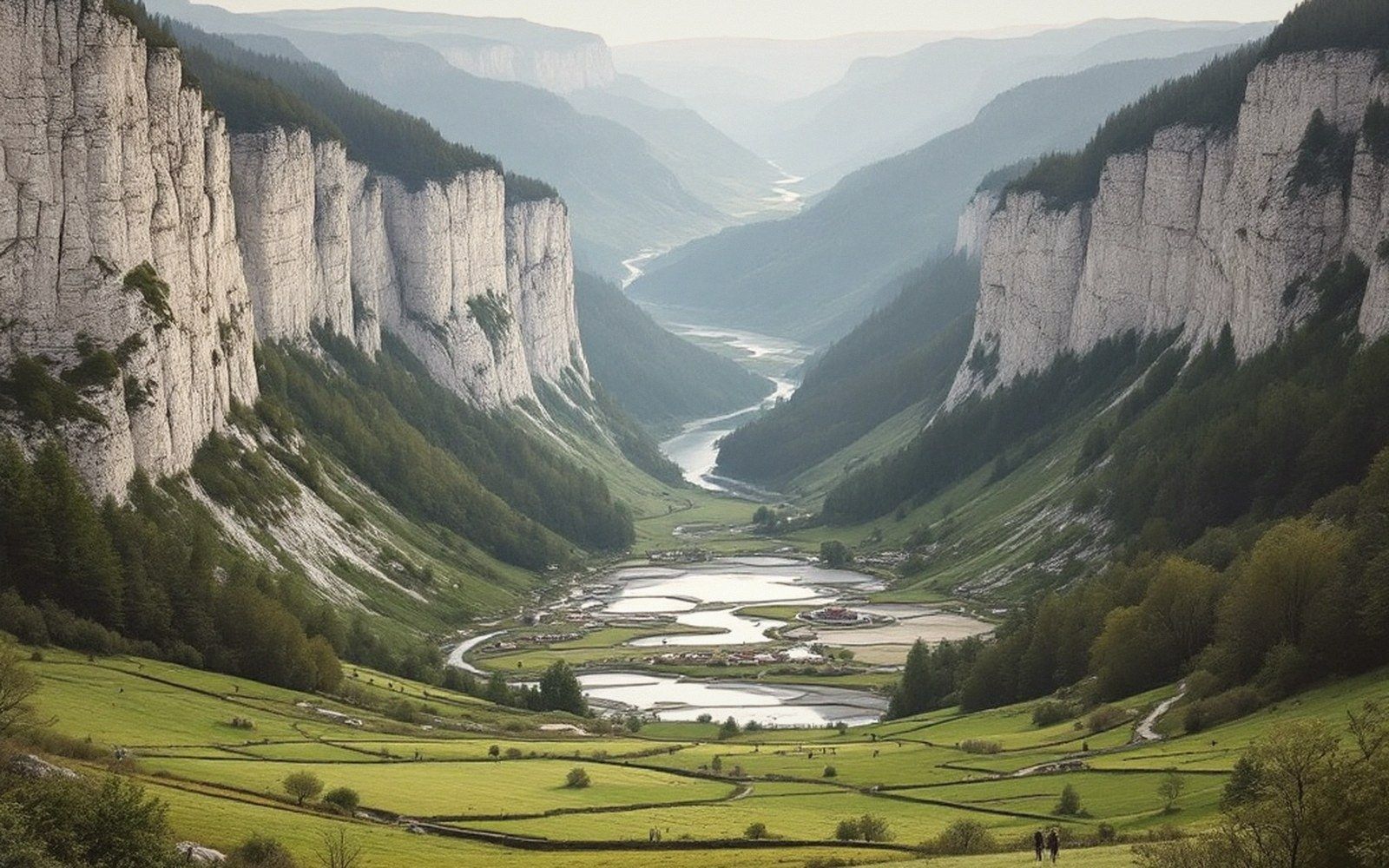
A valley that cuts backwards
A reculée is a blind valley walled on three sides. It did not erode downstream from a river — it ate backwards into the plateau from a spring, undermining the cliff above until it collapsed, over and over.
The signature of this survey
Follow the water
Onto the plateau
Rain lands on a surface that will not hold it: it sinks into joints and bedding planes, leaving valleys with no streams.
Dry valleys →Through the rock
The limestone stores the rain in fissures and hands it on downward until a marl floor turns it sideways.
The rock is the reservoir →Out at the spring
It comes back at the foot of the escarpment — and the spring that returns it eats the plateau backwards.
A valley that cuts backwards →Into the pan
Some of it crosses a buried salt bed on the way and surfaces as brine; fire and wind finish the job.
Brine comes up on its own →And after the water: the slope (Vines & Marl) and the vat (Fruitières). Every guide on this site says where in the sequence it sits.
The five sections
Worth reading first
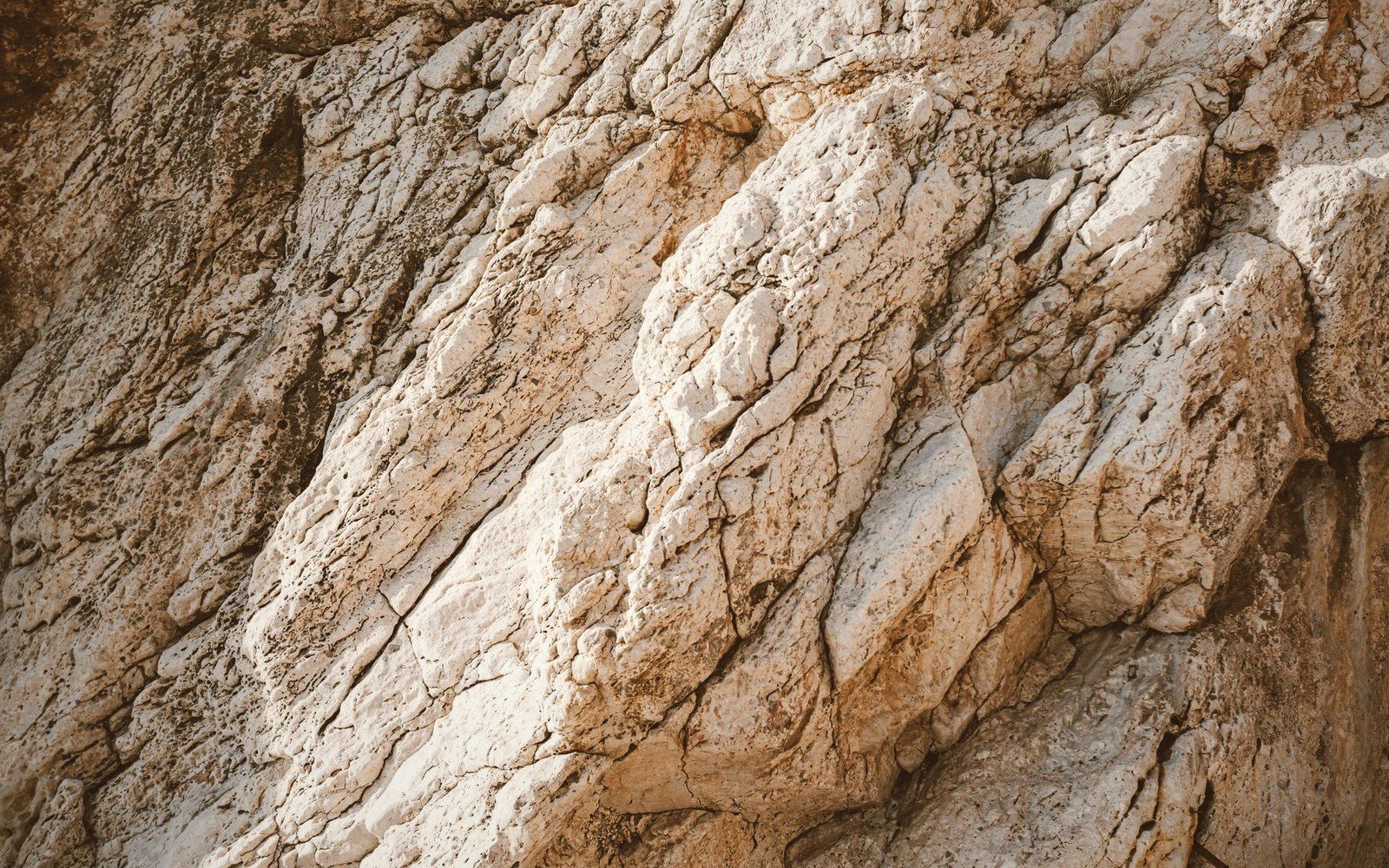
The rock is the reservoir
Limestone stores rain in fissures and gives it back at a spring, so the flow answers the weather with a delay measured in days.
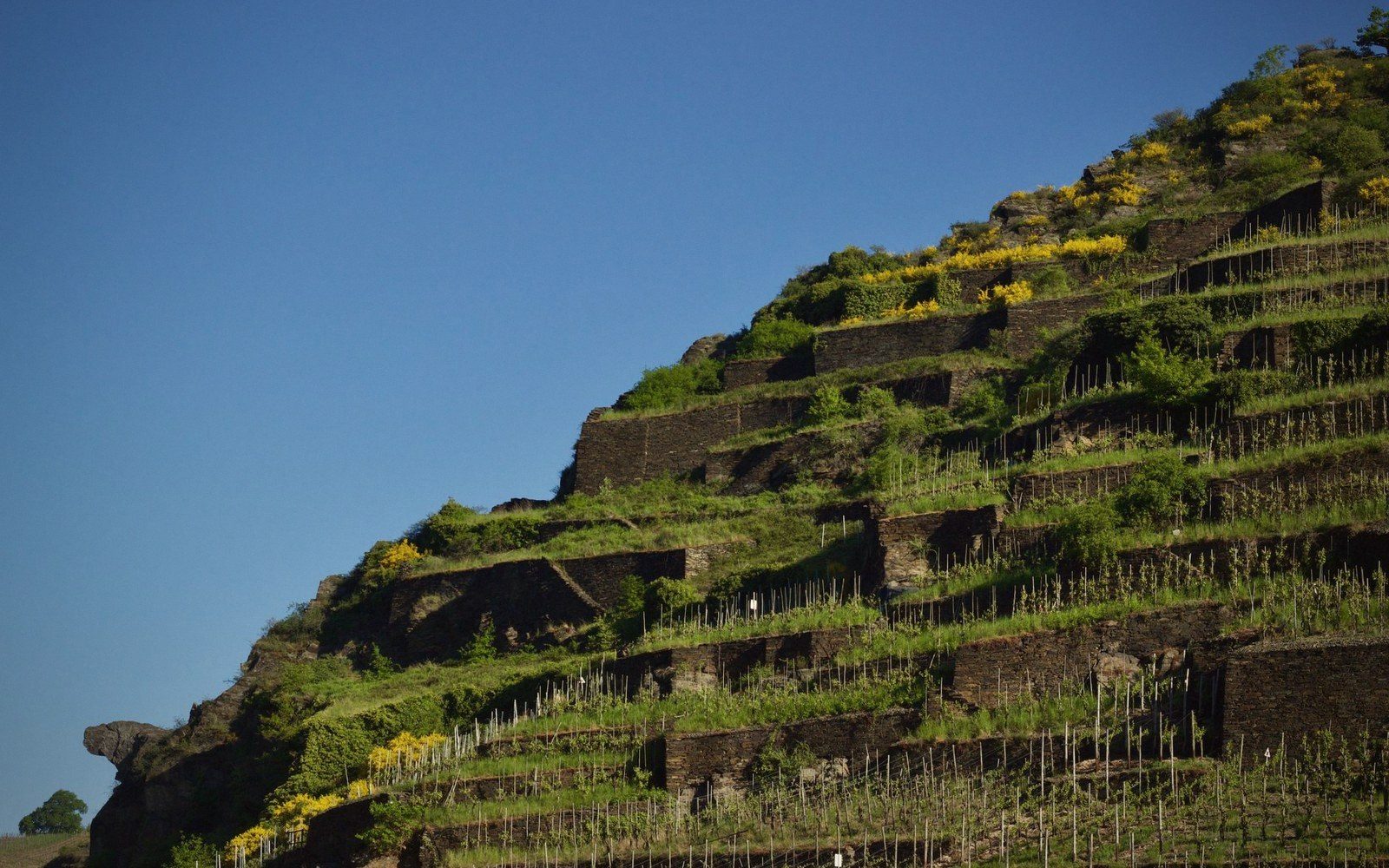
Grey marl
The clay beneath the limestone edge holds water and warmth differently, which is why the vines are where they are.
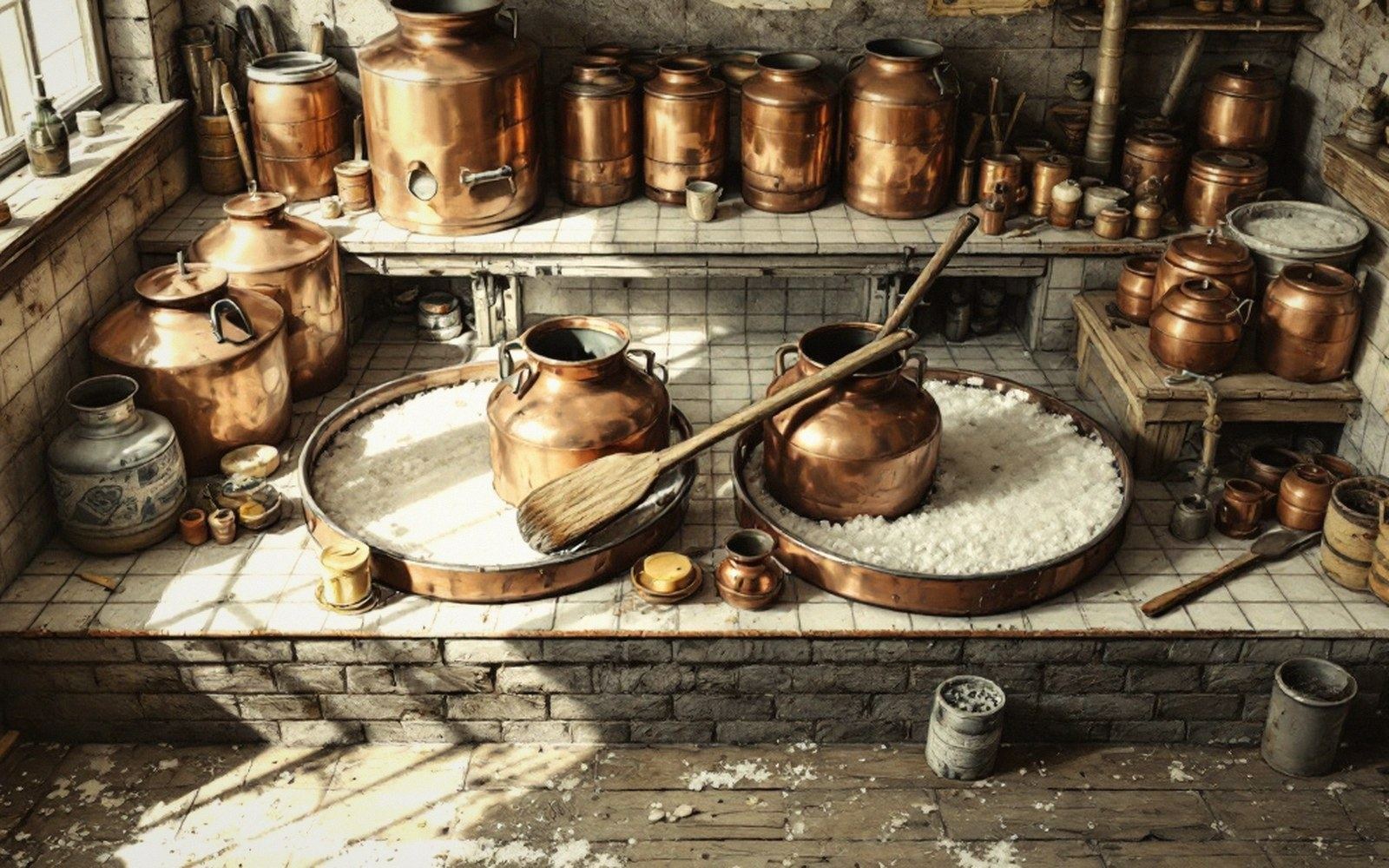
Cheese made in common
A single farm could not produce enough milk in a day for one large wheel, so milk was pooled and the cheese was made and owned collectively.
Kept in the field by
The partners who keep this survey walking the escarpment — boots, plates and print.
The ground itself
Where this survey walks
The escarpment runs along the western face of the Jura, where the plateau meets the Bresse plain. Six places anchor the guides.