Graduation towers
Before brine ever met a fire, evaporation did the heavy work — and thorn did it cheaply.
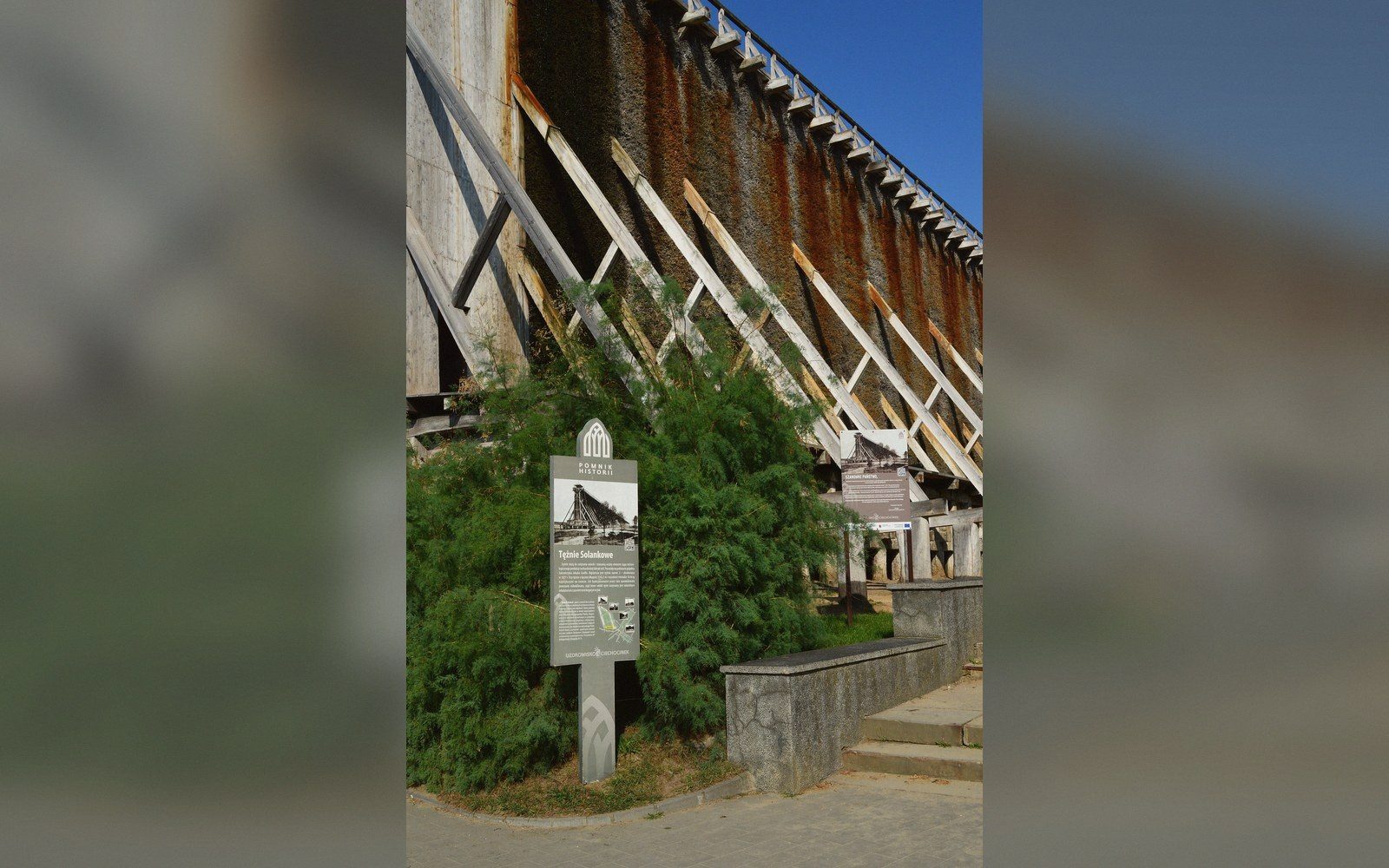
Thorn and air
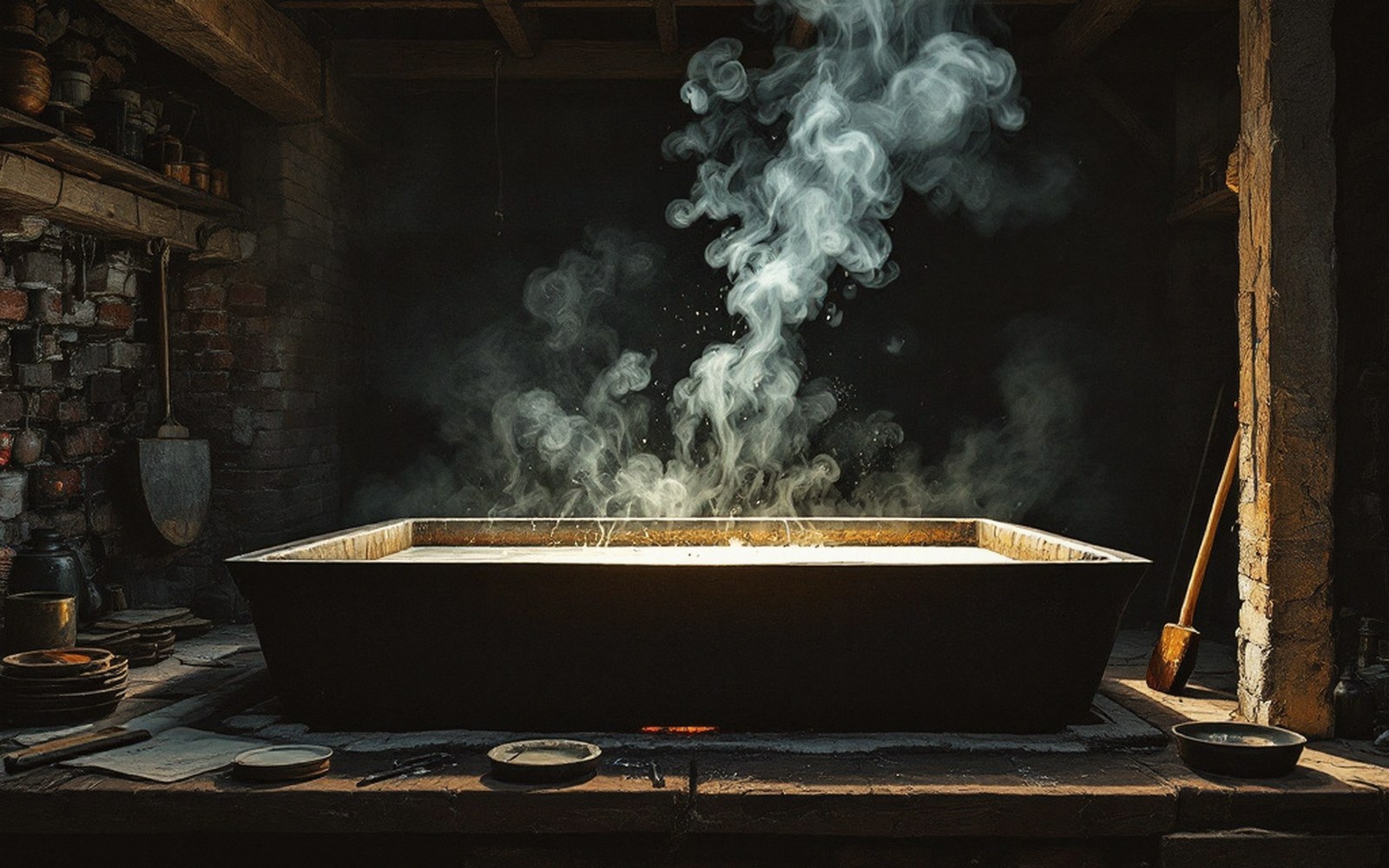
Boiling brine is expensive. Fuel has always been the dominant cost of salt production, and the saltworks of the Franche-Comté and its neighbours learned early that the less water you carried into the pan-house, the less wood you burned. The solution was to let wind and air do a first pass: graduation towers.
A graduation tower — Gradierwerk in the German-speaking industry that perfected the form, graduation in the French tradition — is essentially a tall open shed, sometimes a hundred metres long, packed floor to ceiling with bundles of blackthorn (prunellier). Weak brine, often barely a few per cent salt by weight when it left the spring, was pumped to the top and released over the thorn. It trickled down through the mass of spiked wood, spreading into thin films and droplets, and evaporated as it fell. The concentrated brine collected in a trough at the base, ready for the pan-house.
The process was slow but almost free. Wind did most of the work; on still, humid days the towers simply stood idle. A well-run installation might double or triple the brine's concentration before a single faggot was lit. That reduction in volume translated directly into fuel savings, which meant cost savings, which meant competitive salt.
Field notes · How the system stacks
- Weak brine at sourcetypically low concentration straight from the spring
- Graduation toweropen thorn-packed shed; evaporation concentrates the brine passively
- Collection troughconcentrated brine gathered at the base
- Pan-houseonly now does fuel enter the equation
Blackthorn was chosen for its dense, branching structure — the more surface area the falling liquid touched, the faster it shed water. The bundles were replaced periodically as mineral deposits and biological growth clogged them, but the thorn itself was cheap and locally available in the hedgerows of the plateau edge.
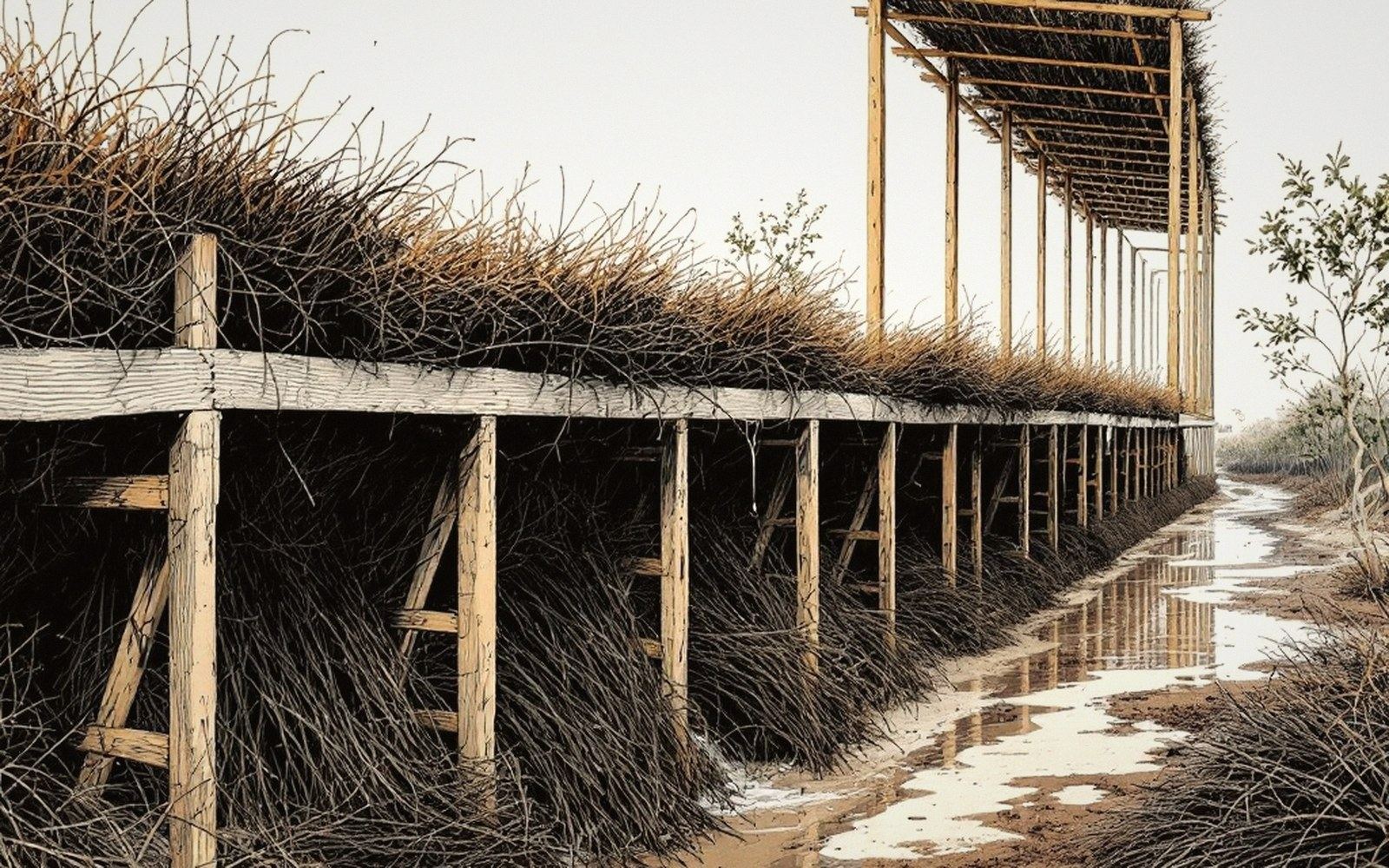
Graduation towers were common across central European salt production from the seventeenth century onward, and a few survive in Germany as protected industrial monuments. In the Jura saltworks, their logic fits neatly into the wider calculus: the brine comes up on its own, but boiling the pan was always where the money went.
Keep following the water