The brine pipeline
Brine moved downhill; wood could not.
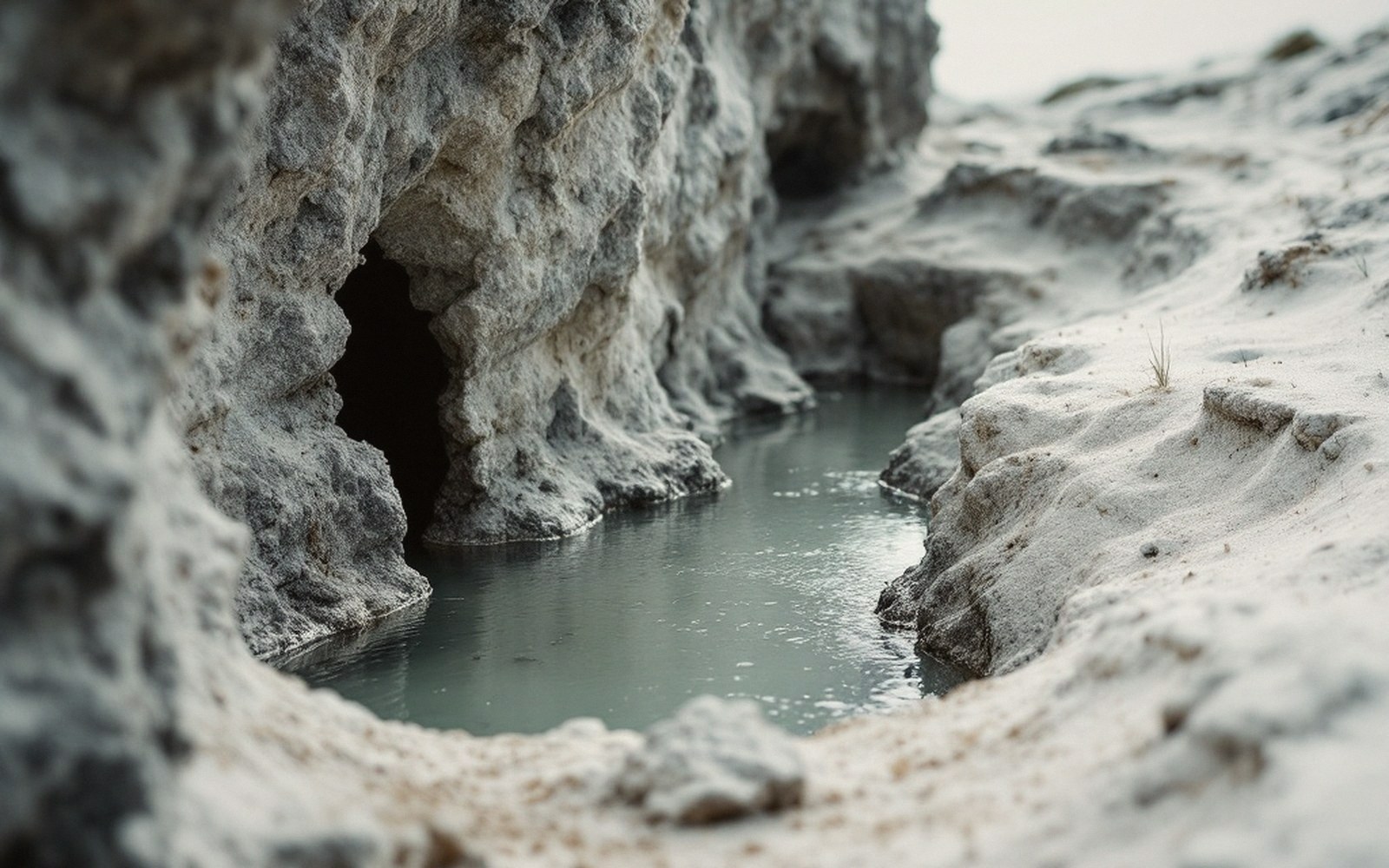
Fuel was the constraint
Boiling brine costs fuel above everything else. In the Franche-Comté saltworks, that fuel was wood — vast quantities of it, cut from the forests of the Jura plateau and the Arc-et-Senans hinterland. The problem was simple: the brine springs sat at the valley floor, surrounded by geological accident, while the forests sat on the plateau above. Carting timber down to the springs was expensive, slow and eventually unsustainable as the nearest stands were exhausted. The logical answer was to move the brine to the wood, not the wood to the brine.
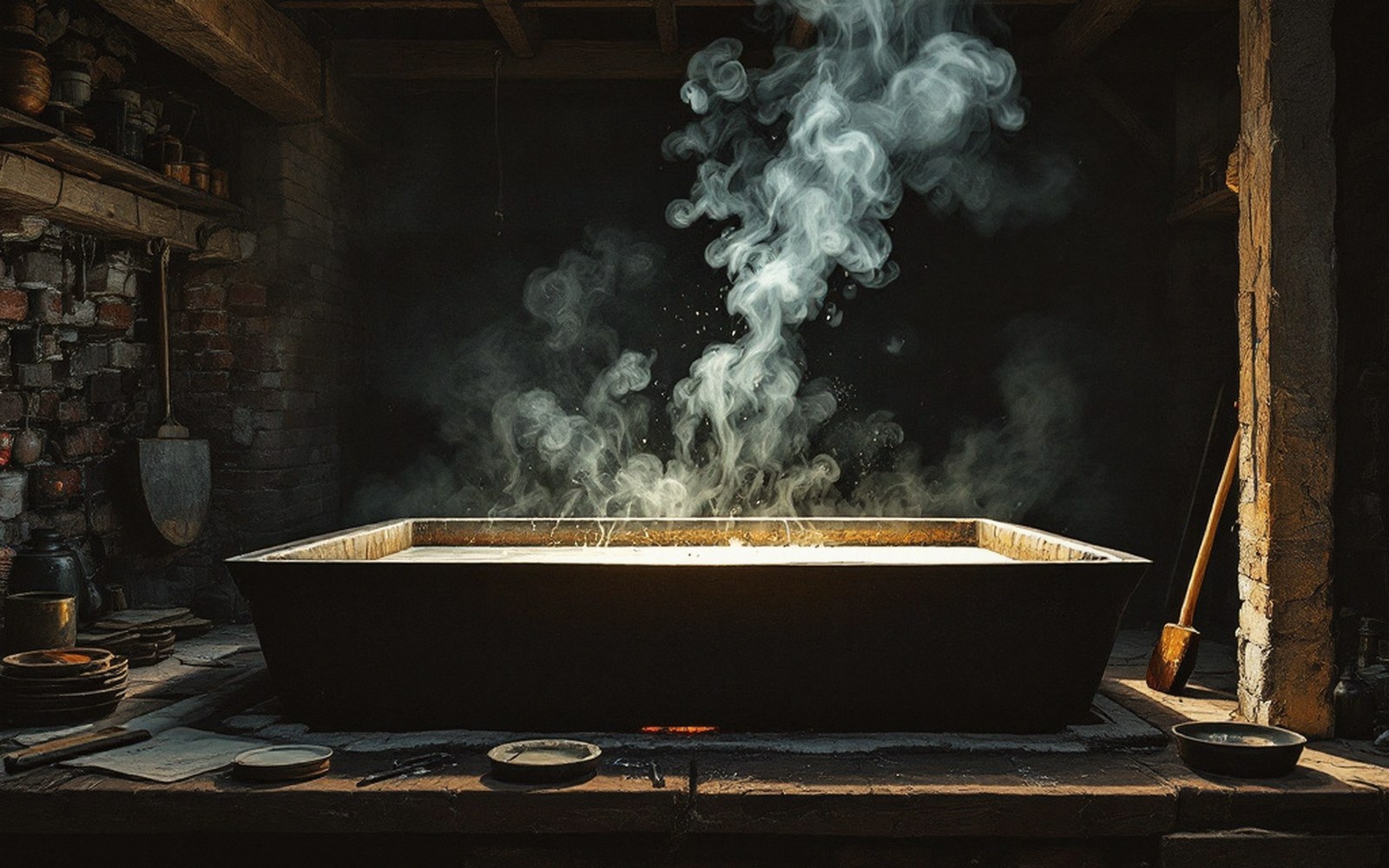
That reversal required infrastructure. In 1779, a wooden pipeline — bored pine logs socketed end to end — was laid between the brine source at Salins-les-Bains and the new royal saltworks being constructed at Arc-et-Senans, roughly twenty-one kilometres to the northwest. The brine flowed under its own pressure, drawn by the fall in elevation between the two sites. No pumping engine was needed; the plateau's own topography did the work.
Field notes · Chronology
- 1779wooden brine pipeline laid between Salins-les-Bains and Arc-et-Senans, approximately 21 km
- 1895production at Arc-et-Senans ceases
The pipeline was an engineering decision that also became an architectural one. Because brine would arrive at Arc-et-Senans continuously and in volume, Claude-Nicolas Ledoux designed the saltworks around that supply — a production facility laid out as a geometric arc, with the director's house at the centre and the boiling halls symmetrically flanking it. The form followed the flow.
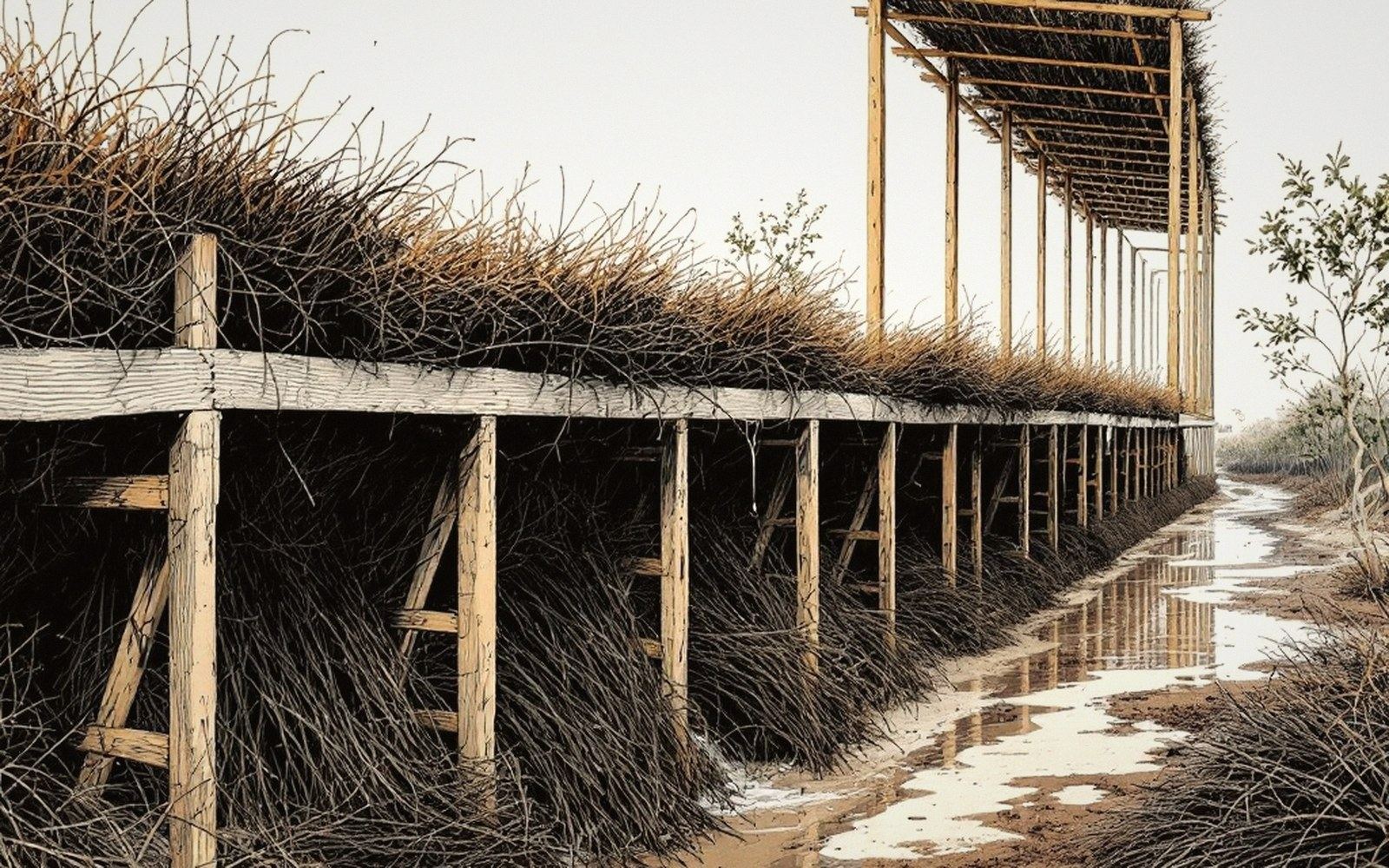
Wood remained the single largest operating cost at the pan, which is why the pan itself was so carefully managed, and why later operators introduced graduation towers to concentrate the brine before it reached the fire at all — every degree of pre-evaporation saved fuel. But the pipeline made the whole system possible. Salt production at Arc-et-Senans continued until 1895, when cheaper sources and changing economics ended it. The pipes rotted long ago. The logic they embodied — route the fluid, not the solid — belongs to every industrial landscape built on the same calculation.
Keep following the water