Turning and rubbing
A Comté wheel is not finished when it leaves the copper vat. The cellar does half the work — and the person walking the aisles does the other half.
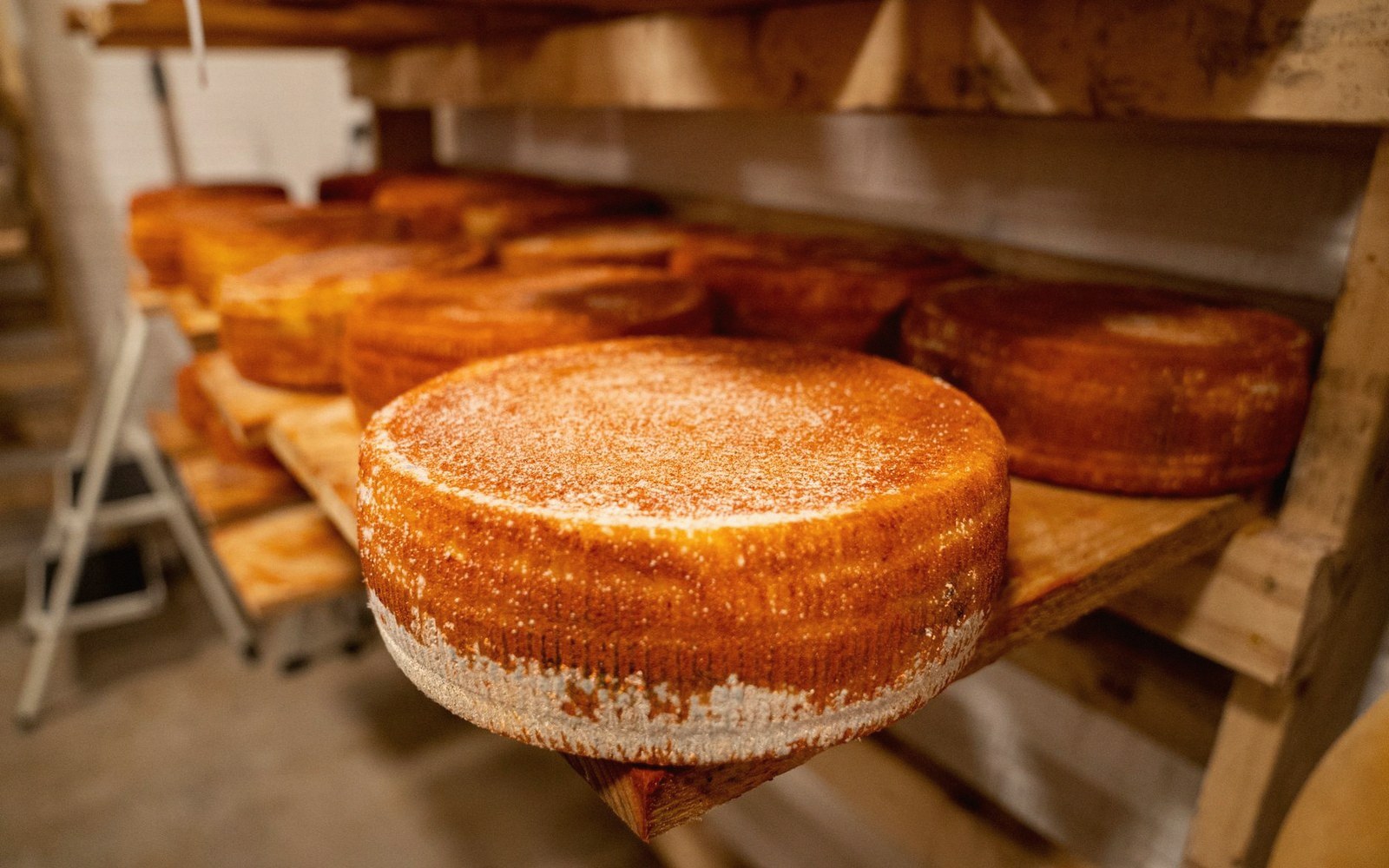
The work that builds a rind
A freshly pressed wheel of Comté arrives in the affinage cellar weighing well over thirty kilograms, pale and yielding. It will stay there for a minimum of four months; serious caves keep it for twelve, eighteen, sometimes twenty-four. What happens in that time is not passive ripening — it is a physical routine, repeated without interruption.
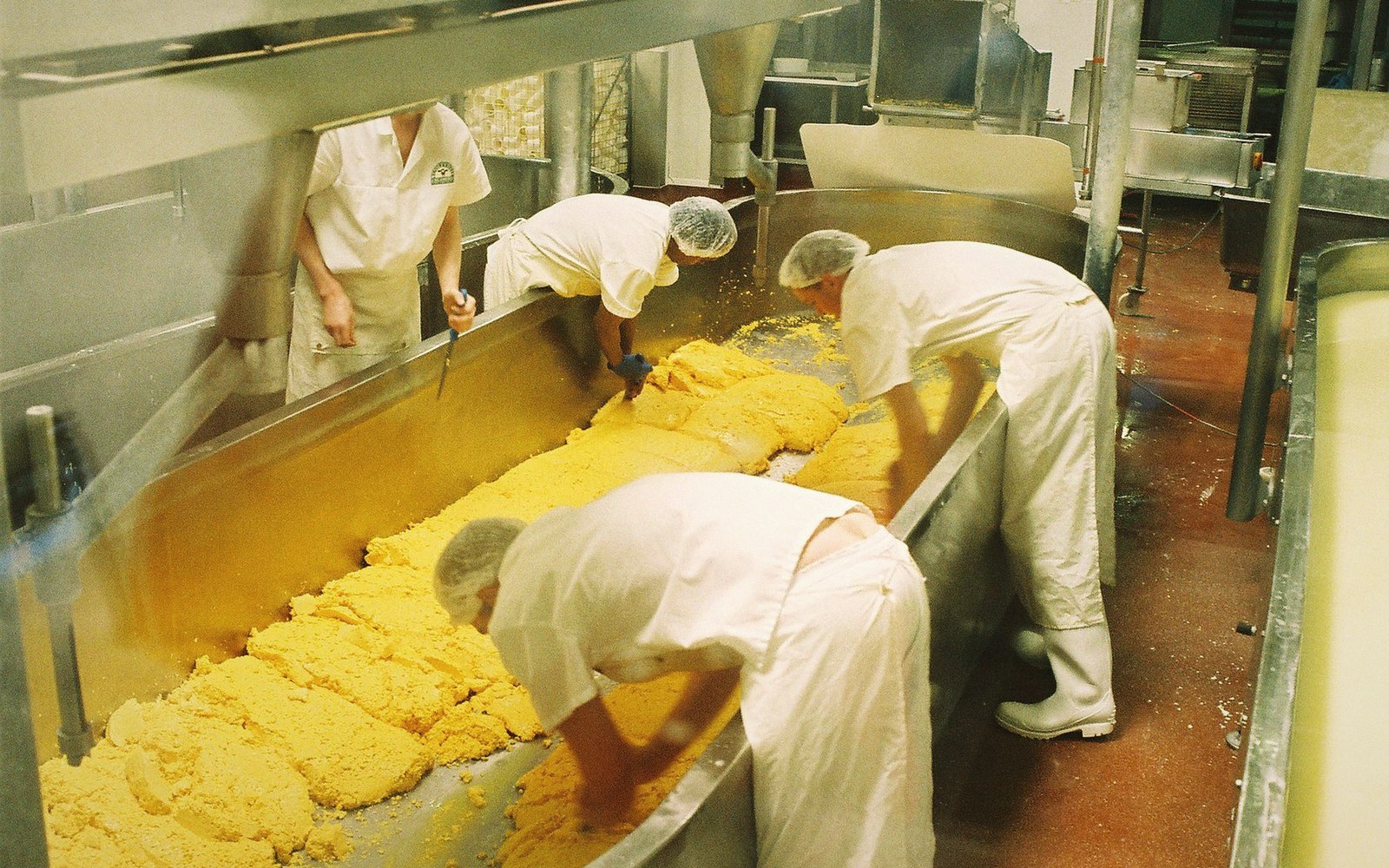
Every wheel is turned and rubbed on a schedule. In the early weeks this happens daily. The rubbing is done with a cloth or brush dampened in a brine solution, coating the surface evenly and introducing the salt that will drive moisture outward and begin to harden the paste beneath. Turning keeps the internal moisture from settling and the wheel from deforming under its own weight — a large Comté can reach around forty-five kilograms, and gravity, given months, will do measurable damage if the wheel stays on one face.
Field notes · The physical routine
- Turning scheduledaily in early weeks, less frequent later; purpose is moisture balance and shape retention
- Rubbing mediumbrine-dampened cloth or brush; introduces salt, hardens the surface progressively
- Rind functionsemi-permeable barrier; protective but gas-permeable to allow internal fermentation
- Affineur's roletactile inspection of every wheel; identifying soft spots or problem discolouration
The rind that forms is not cosmetic. It is a controlled, semi-permeable barrier: firm enough to hold the wheel's shape and protect the paste from drying too fast, porous enough to let gases escape as the interior ferments and complex flavours develop. A damaged or uneven rind can allow unwanted moulds to penetrate or cause the wheel to crack. The affineur — the cellar specialist — reads the surface constantly, feeling for soft spots or discolouration that signal a problem beneath.
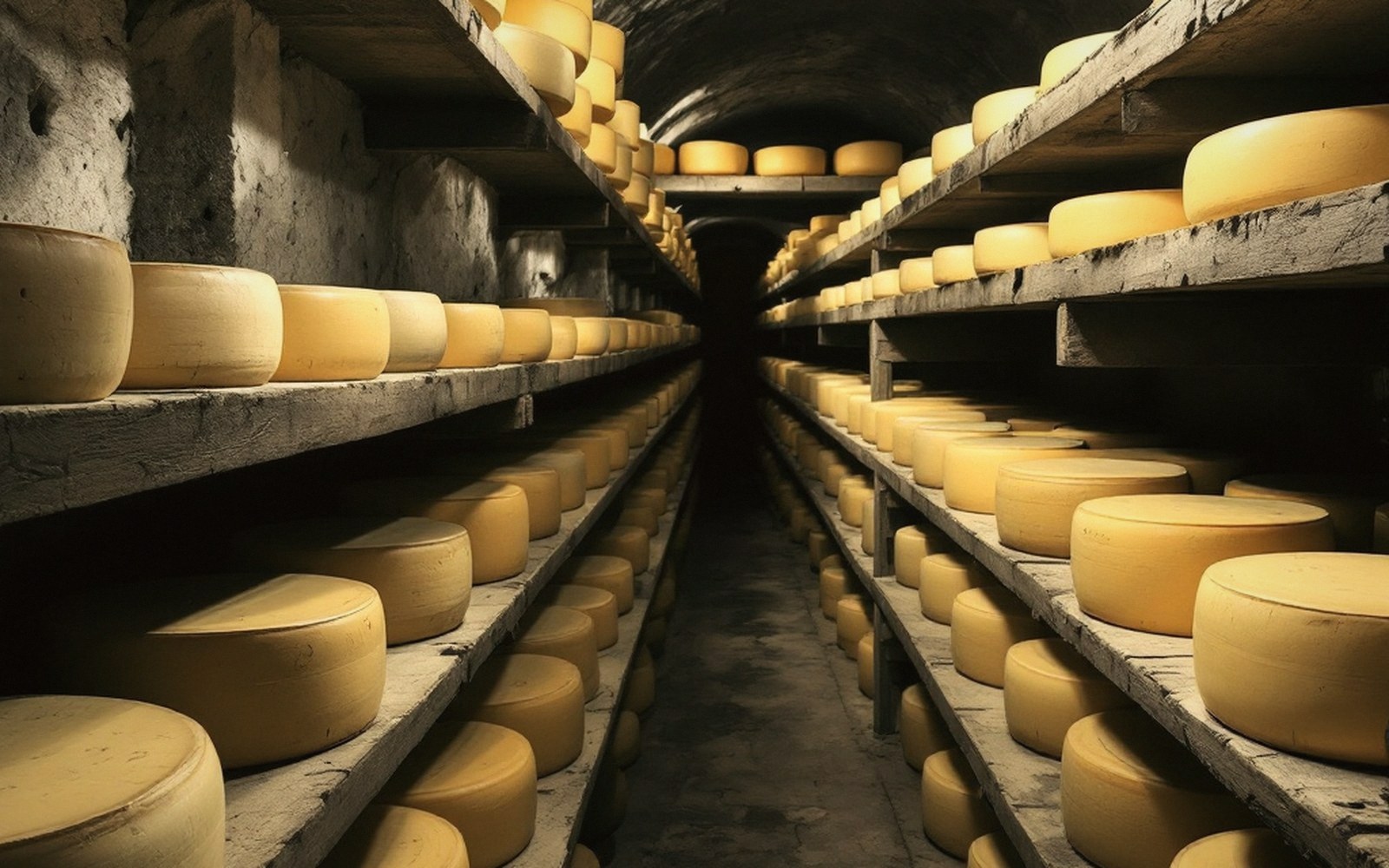
Temperature and humidity in the cellar are held within tight ranges, typically between ten and fourteen degrees Celsius. The constant temperature without machinery that natural or semi-natural cellars provide is not a convenience; it is a condition of the process. A fluctuation of a few degrees changes enzyme activity and shifts the balance of fermentation.
Field notes · Key conditions
- Minimum affinage4 months; serious producers: 12–24 months
- Cellar temperaturetypically 10–14 °C
- Mature wheel weightup to approximately 55 kg
The result of all this handling is visible and tangible: a rind that is dry, slightly grainy, and the colour of toasted wheat — and a paste inside that the months of patient work have made possible.
Keep following the water