The copper vat
Why the metal matters, and the shape that lets one person work it.
Inside the fruitière, one metal does everything
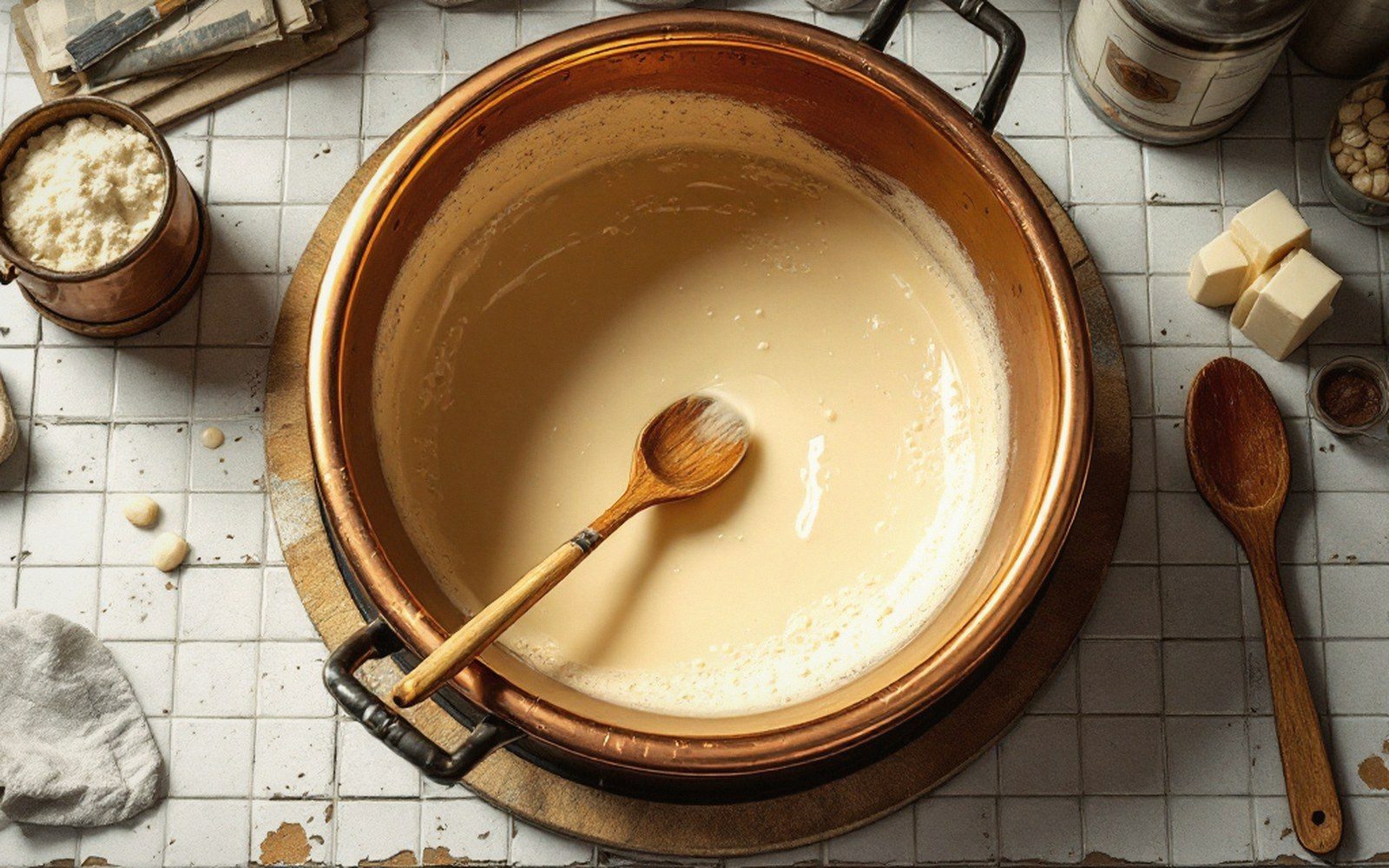
A fruitière — the cooperative dairy where pooled milk becomes mountain cheese — owns many things, but nothing as central as the vat. Everything else is secondary infrastructure; the vat is where cheesemaking actually happens.
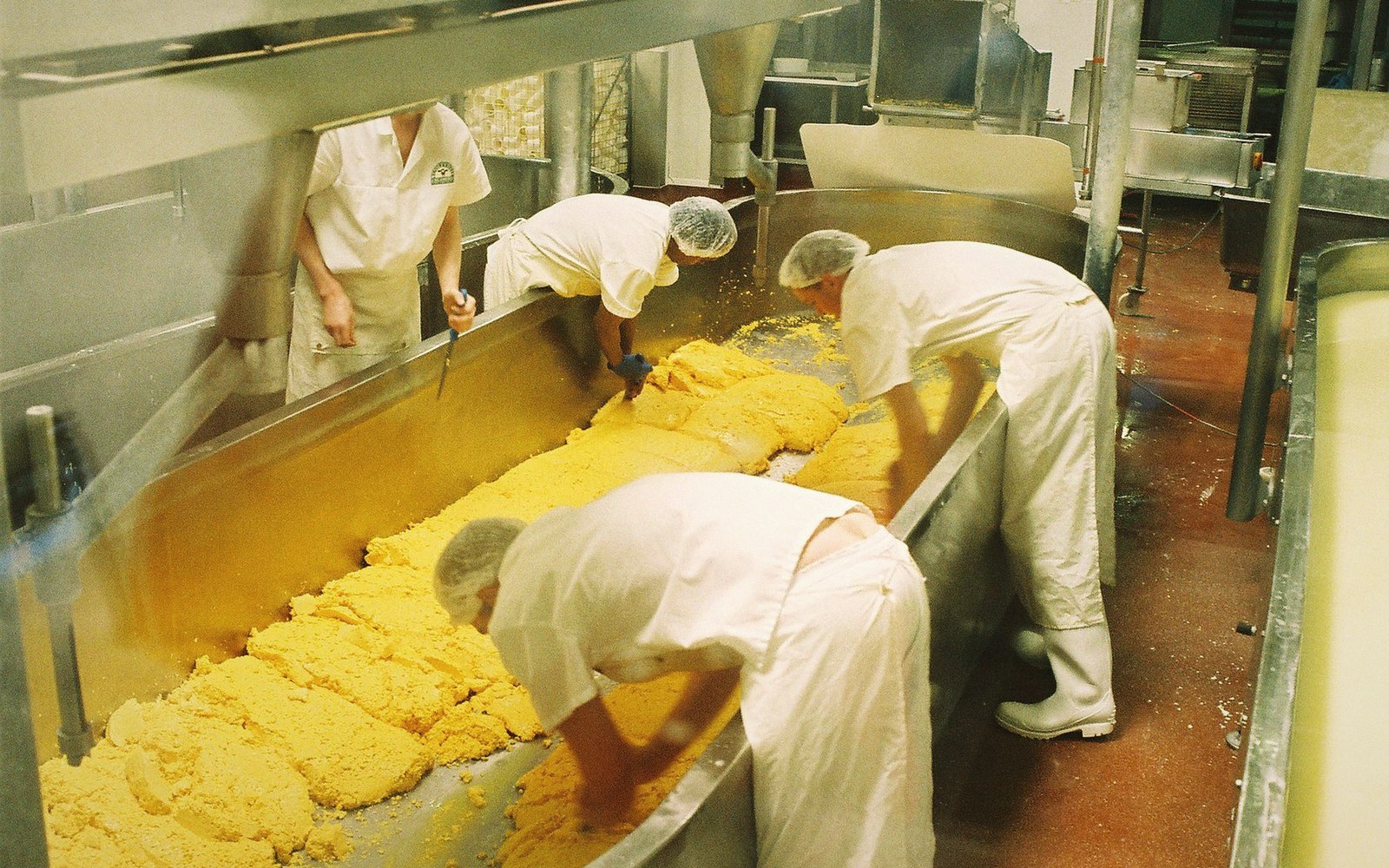
Copper is the metal because its thermal conductivity is exceptional. Milk heats and cools fast and evenly across the whole volume, giving the cheesemaker precise control over curd formation. That matters because Comté, like all the great pressed cooked cheeses of the Jura, requires the curd to be heated a second time — roughly to 54 °C — to drive out whey and firm the grain. A vat that hot-spots would produce inconsistent texture from one wheel to the next. Copper does not.
Field notes · What the vat does — and why copper
- Thermal conductivitycopper heats and cools milk evenly, preventing hot-spots that would produce inconsistent curd
- Second heating (roughly 54 °C)required for pressed cooked cheeses like Comté; must be precise across the full volume
- Bacteriostatic effectcopper ions suppress unwanted bacteria, supporting the starter culture
- Re-tinninginterior tin lining wears; vats must be periodically re-tinned to remain safe
The shape compounds the advantage. A traditional copper vat is an open hemisphere — a great shallow bowl suspended over the heat source, wide enough to work with both arms, deep enough to hold several hundred litres of milk. The curved base has no corners for curd to lodge in. The geometry means one person with a long-handled curd knife can reach every part of the interior from a standing position at the rim, cutting the curd into uniform granules with a single systematic pass. The whole operation — heating, adding starter and rennet, cutting, cooking, drawing off the whey — is scaled to fit what one or two people can actually manage without mechanised agitation.
There is also a chemical dimension. Copper ions have a mild bacteriostatic effect, suppressing unwanted microorganisms while leaving the starter cultures — carefully maintained from batch to batch — to dominate fermentation. Modern stainless steel, easier to clean and certify, lacks this property. Many fruitières today use steel lined with copper, or blend vat types. The older cooperatives that still run bare copper are careful about it: copper requires scrupulous cleaning to prevent toxic residue.
Field notes · Shape and scale
- Hemispherical open bowlno corners, curved base, workable by one or two people from the rim
- Capacitytypically several hundred litres; sized to a day's pooled milk from cooperative members
- Curd knife reachthe wide, shallow geometry lets a single worker cut the full curd in one systematic pass
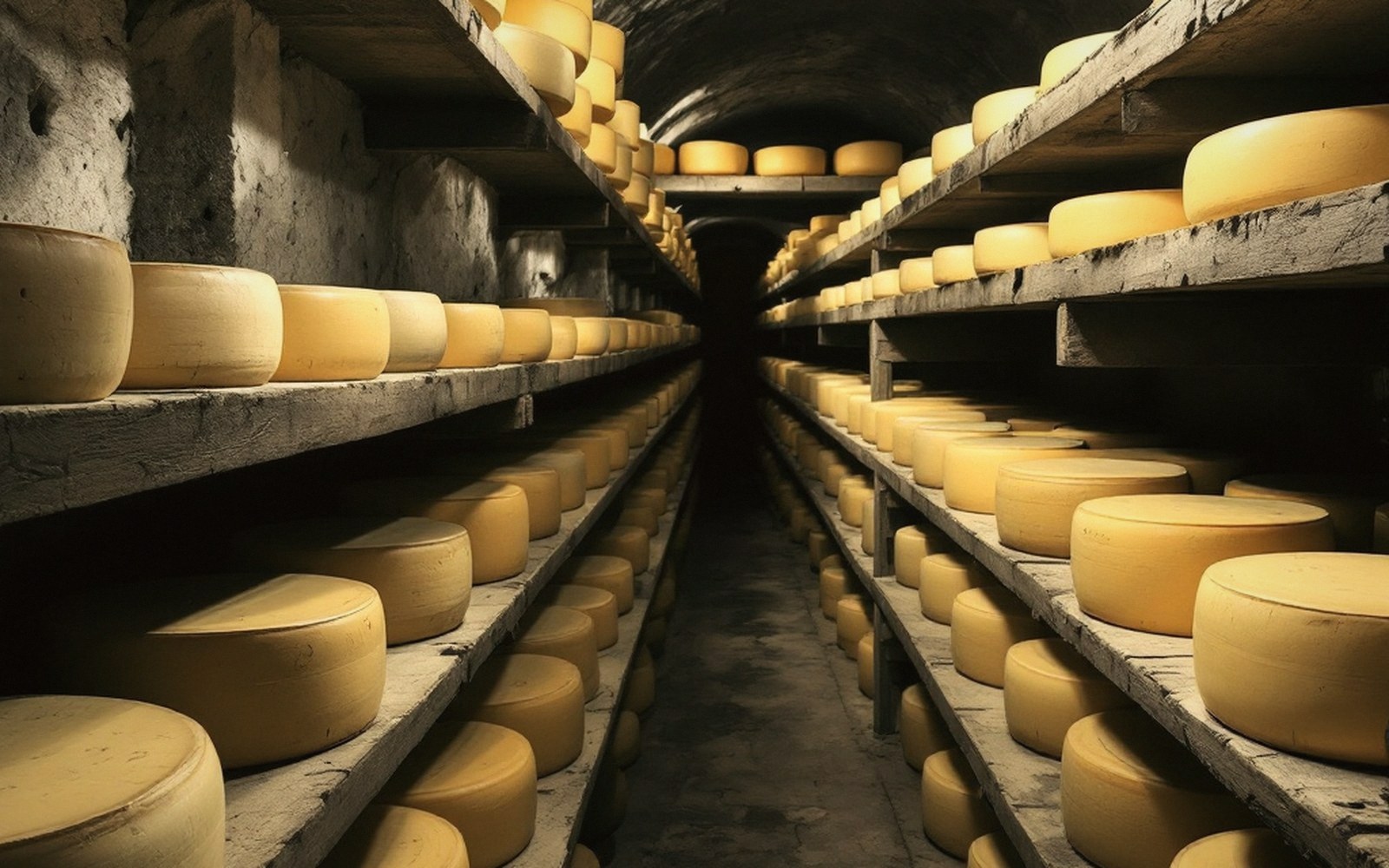
The wheel that eventually leaves the cellar carries the geometry of that copper bowl in its dimensions. Form followed function, and the function began here.
Keep following the water