The wheel and the cellar
A large wheel of cheese is not just a large cheese — its mass is part of its technology.
Size as preservation
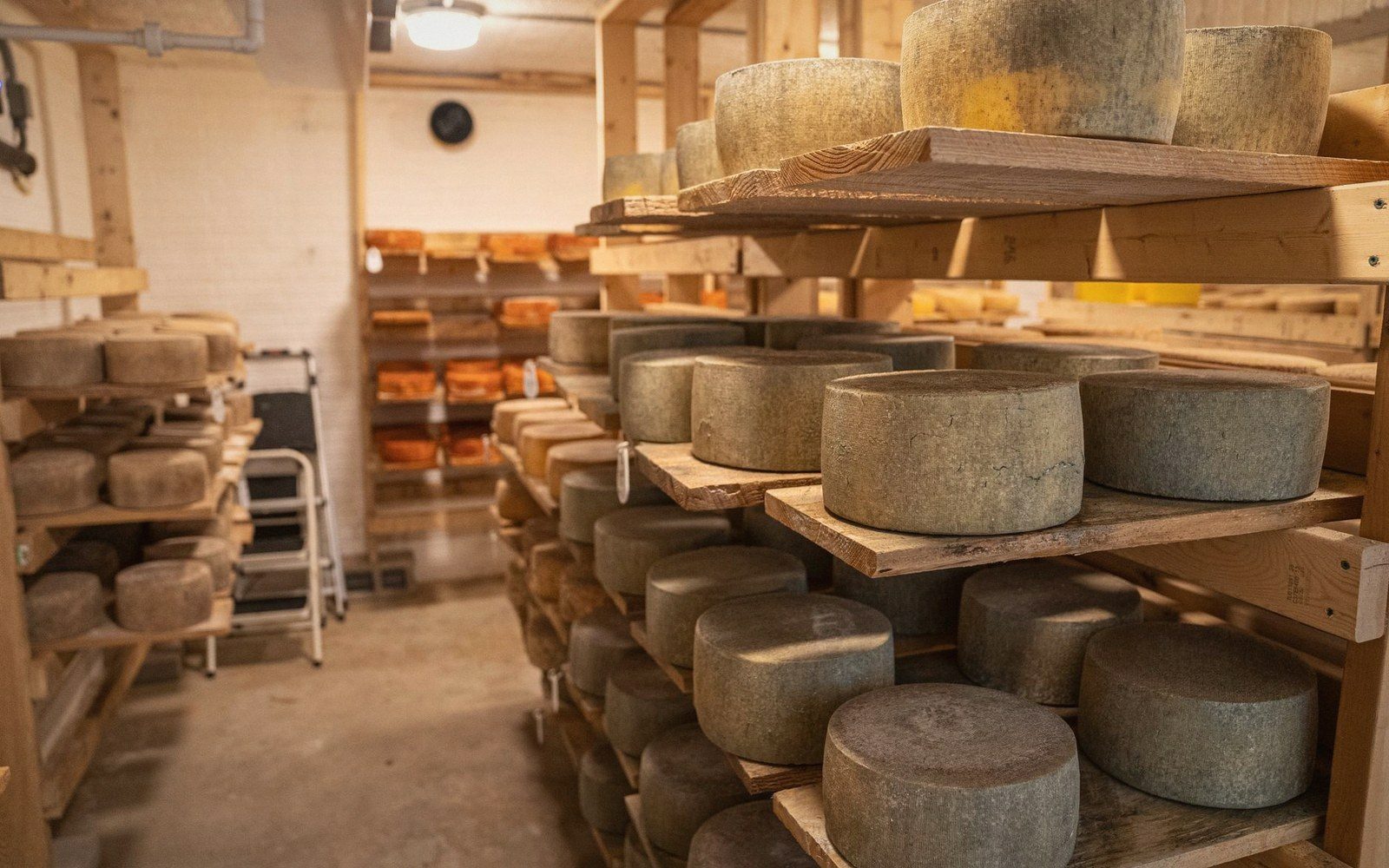
A wheel of Comté can weigh forty-five kilograms. That is not an accident of appetite or tradition for its own sake; it is a solution to a problem that every Alpine and Jura cheesemaker faced before refrigeration existed and would face still without a cold cellar to work with.
The logic runs like this. A small cheese has a high ratio of surface area to interior volume. Moisture escapes quickly, the rind dominates, and the paste dries unevenly or spoils fast. Scale the wheel up and that ratio shifts dramatically in favour of mass. The interior stays buffered — cooler in summer, slower to lose moisture, resistant to the swings that would crack or corrupt a smaller form. The rind, carefully built over months by the affineurs who turn and rub each wheel by hand, becomes a proportionally thinner envelope over a much larger protected core.
Field notes · How size changes the physics
- Surface-to-volume ratioas a wheel's diameter increases, its surface area grows as the square while its volume grows as the cube; mass wins
- Forty-five kilogramsapproximate weight of a standard Comté wheel; used here as the anchor number
- Rind-to-paste ratiosmaller wheel means proportionally more rind and faster moisture loss; larger wheel reverses this
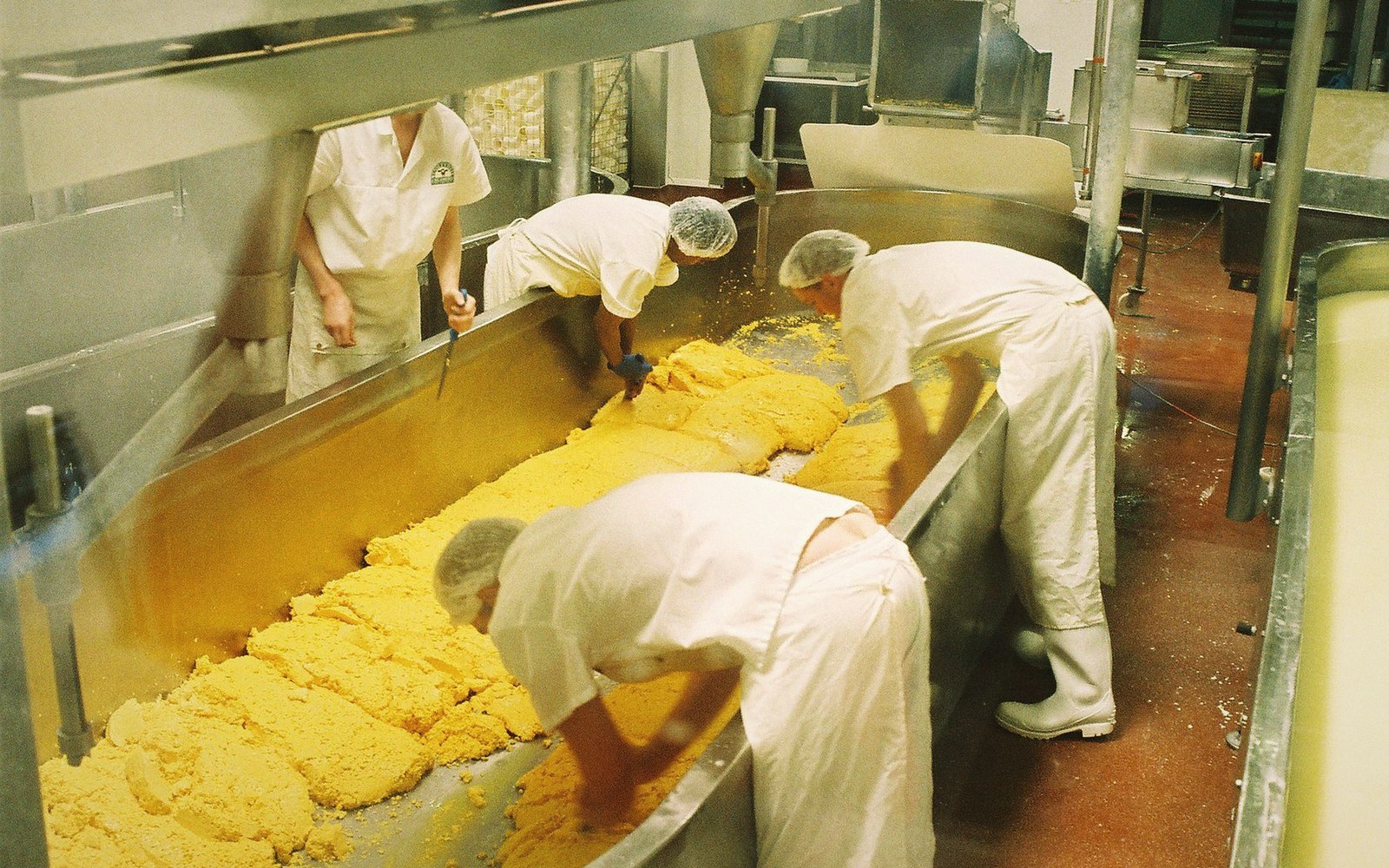
This is why the wheel format and the communal fruitière — the shared dairy where pooled milk is worked into a single large batch — developed together. One farmer's daily milk yield could not fill a vat large enough to form a wheel of this size. Only by gathering the output of several herds, often from an entire village, could the volume be reached. The wheel's mass demanded cooperation as a precondition.
What the cellar does
Mass buys time, but it does not keep indefinitely without the right conditions. The cellar in the rock provides them: a stable temperature, typically between ten and fourteen degrees Celsius, with humidity high enough to slow surface desiccation without encouraging unwanted mould. Limestone, which underlies the Jura plateau and its valleys, is almost uniquely suited to this. Cut into it, and you have walls that neither overheat in July nor freeze in January. The rock absorbs and releases heat slowly enough to flatten seasonal extremes entirely.
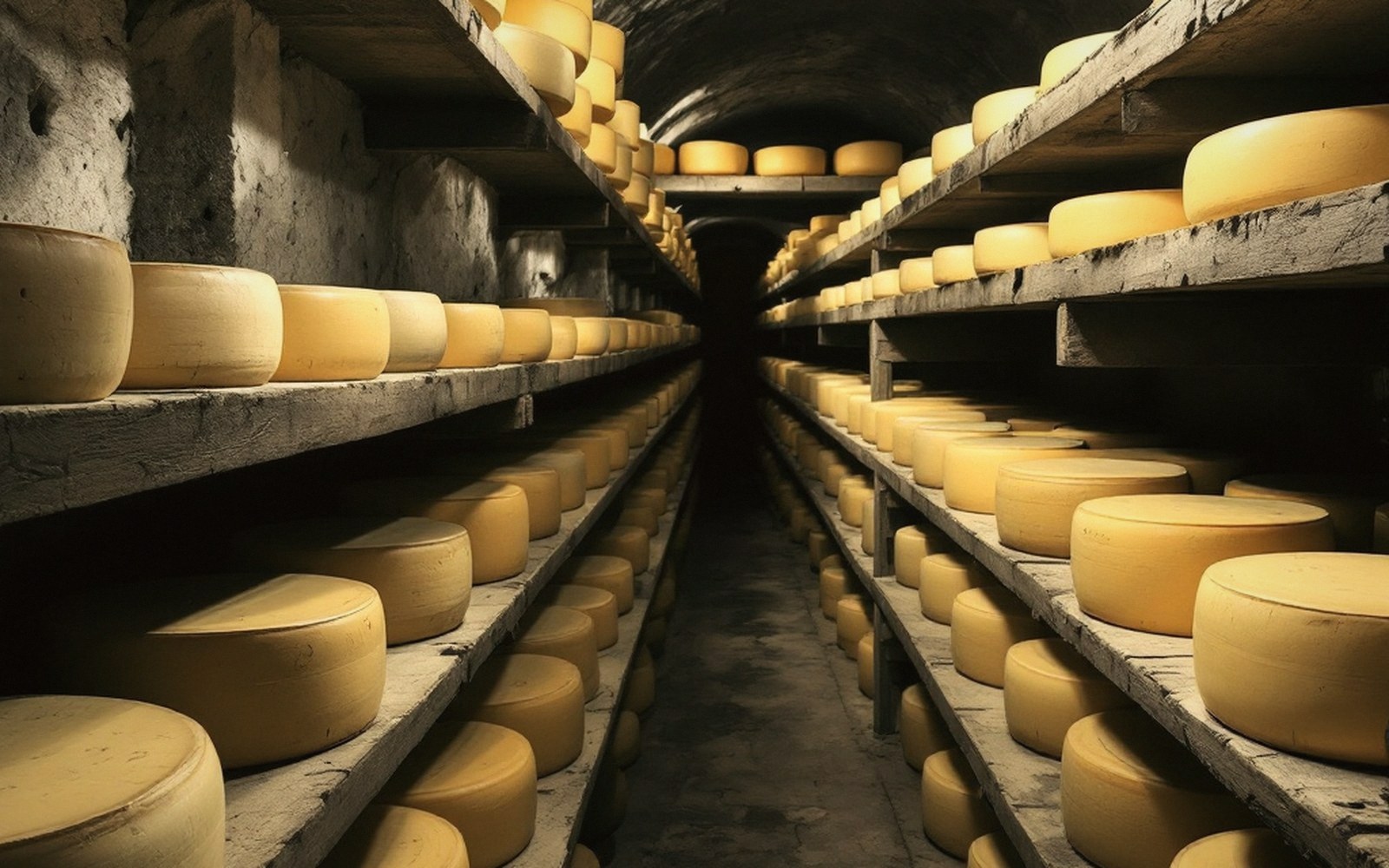
Together, mass and stone create an extended window — months rather than weeks — in which the biochemistry of the paste continues working: breaking down proteins, developing flavour compounds, producing the crystalline granularity that a long-aged Comté achieves. The wheel is large so it can wait. It waits in a cellar that the geology provides almost free of charge.
Field notes · Chronology of the idea
- The cooperative fruitière and the large-wheel format developed togetherneither precedes the other; the volume constraint drove both
- Pre-refrigeration contextthe entire logic of mass-as-buffer predates mechanical cooling and remains valid today
A region where the rock happens to be limestone and the terrain happens to concentrate cold air underground has, embedded in its geology, the infrastructure for a durable food. The wheel and the cellar found each other because the Jura gave both the reason and the means.
Keep following the water