Cheese made in common
A single farm's daily milk could not fill one large wheel. Pooling it was not a choice — it was arithmetic.
The problem of the single cow
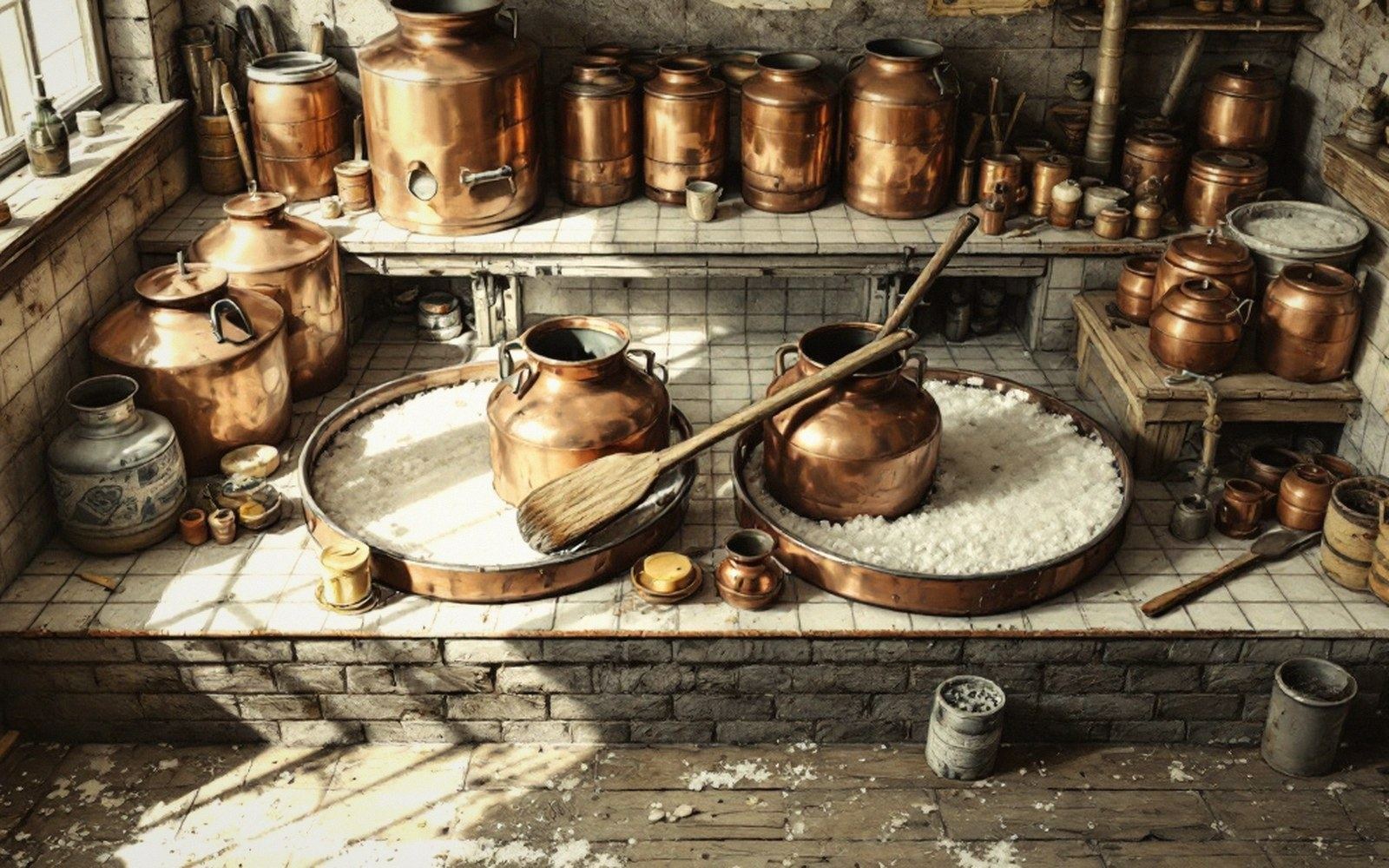
A mature Comté wheel weighs somewhere between thirty-five and forty-five kilograms and demands around five hundred litres of milk to make. A small mountain farm in the Jura — even a productive one — could not generate that volume in a day. The milk would sit, acidify and spoil before enough had accumulated. The logic of the cheese, in other words, exceeded the logic of any one holding. Farmers solved this not through technology but through organisation: they built a fruitière, a shared dairy where neighbours brought their milk each morning and the wheel that resulted was owned by all of them in proportion to what they had poured in.
The word fruitière comes from fruit in its older sense of yield or return. The fruitière was the house of the collective yield. It appeared in the Jura and the Alps during the medieval period, and its existence shaped the entire agricultural structure of the limestone plateau. Farms were sized not for what one family could use but for what made sense as a unit of contribution to the common pot. The fruitière was not a cooperative in the modern legal sense, though that is what it eventually became — it was first a practical arrangement among people who had no other way to make the cheese at all.
Field notes · The founding arithmetic
- ~500 litres of milkvolume needed to make one mature Comté wheel
- 35–45 kgtypical finished weight of a Comté wheel
- Milk brought dailyspoilage made accumulation impossible without pooling
How the arithmetic worked
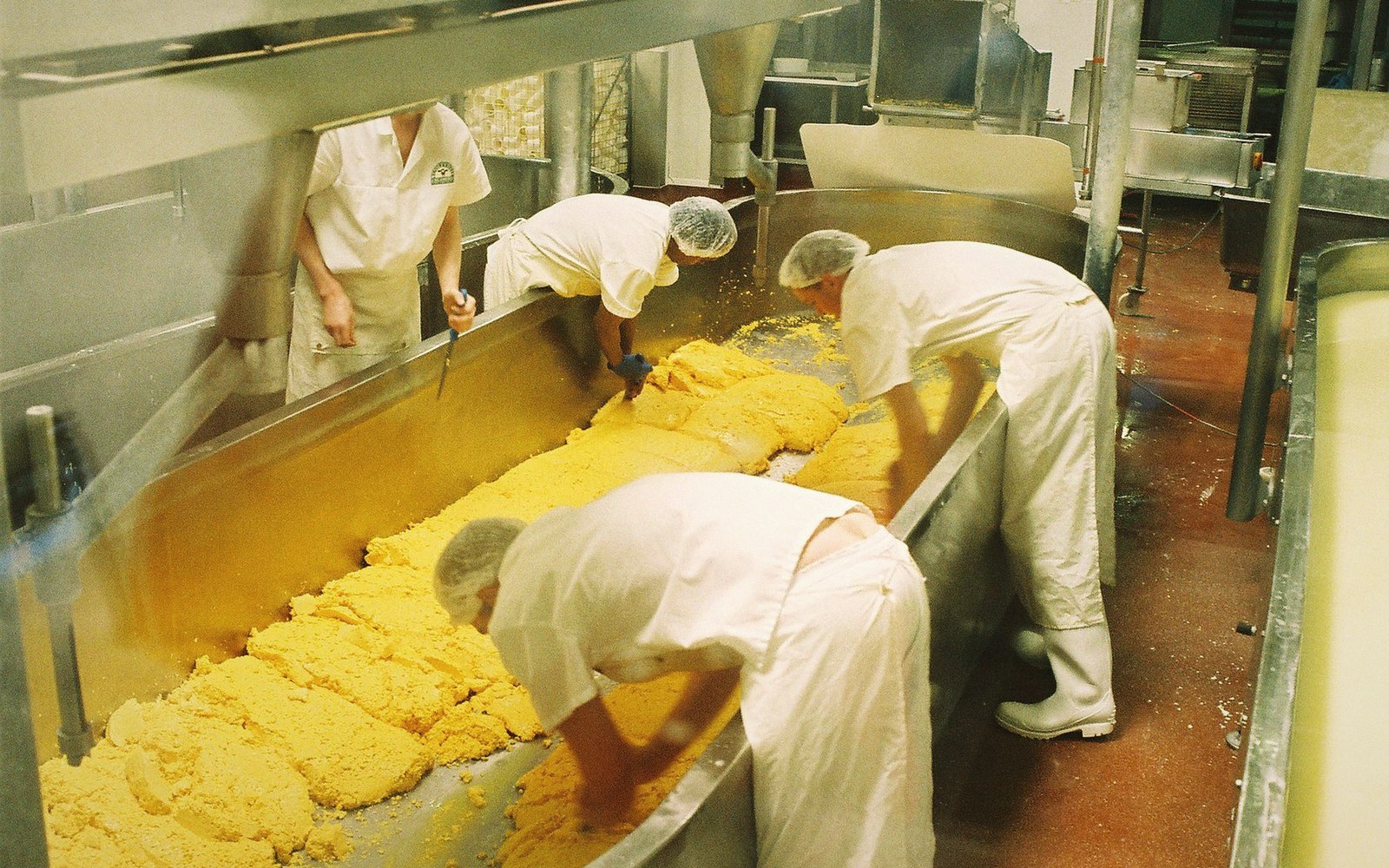
Each morning, members carried their milk to the fruitière and it was weighed or measured. A register kept the running total of each contributor's share. When a wheel was finished and sold, the proceeds were divided back in the same proportions. This system demanded trust and transparency — a bad actor who brought watered or acidified milk polluted the common batch — and so the fruitière developed its own social governance long before it had formal legal standing. The fromager, the cheesemaker hired or elected by the members, occupied a position of real authority. He decided when the milk was ready, how the rennet was added, how long the curd was heated and stirred in the copper vat, when the wheel was ready to press, and when it could go down to the affinage cellar. His reputation was the fruitière's reputation.
The cheese made under this system — what became Comté under its modern appellation — required not just correct milk but consistent milk. Comté is produced exclusively from the milk of Montbéliarde or French Simmental cattle, the breeds suited to the plateau's pastures. Grass and hay from the limestone grasslands, with their particular botanical diversity, directly affect the flavour of the cheese. This is why the appellation rules restrict not just the cheese's geography but the diet of the animals: no silage, no fermented feed. The collective discipline that the fruitière enforced socially was later codified in law, but the law was written around a practice that already existed.
What the fruitière built
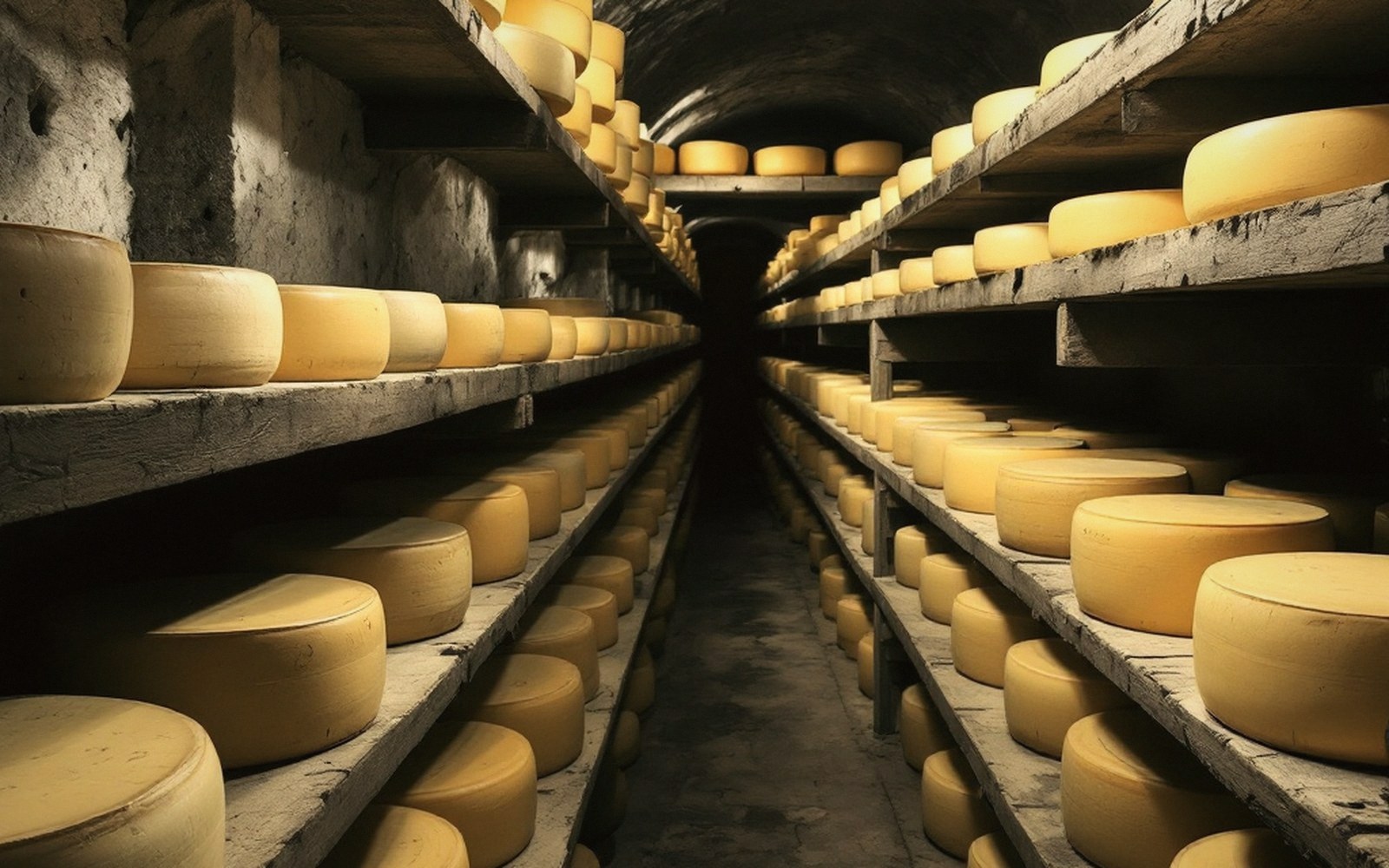
The physical fruitière was modest: a stone building with a hearth, a large copper cauldron, a press and — critically — a cellar below or adjacent for the earliest weeks of turning and rubbing before wheels went to a specialist affineur. The building sat at the centre of the contributing farms, often at a crossroads or beside a spring, because clean water for washing the equipment and cooling the milk mattered as much as the location's convenience. On the limestone plateau, where springs emerge along the contact between permeable rock and impermeable marl, that alignment between geology and dairy geography was not coincidental.
Field notes · Key terms
- Fruitièreshared village dairy where member-farmers pool milk and divide proceeds proportionally
- Fromagerthe cheesemaker employed or elected by the fruitière; controlled the entire make process
- Affineurspecialist who matures wheels after the initial cellar period
- Fruit (archaic)yield or return; root of the word fruitière
Today the fruitière survives in two forms: the small village cooperative, which may still collect milk from a handful of farms and make wheels on-site, and the larger modern facility that processes milk from an entire valley and sends wheels on to industrial affinage. Both trace their logic to the same origin — the morning arithmetic of five hundred litres and a single farm that could not supply it alone. The collective was not an ideology. It was what the cheese required.
Keep following the water