The cirque head
Where the valley ends and the rock gives way — or gives out water
The wall that explains everything
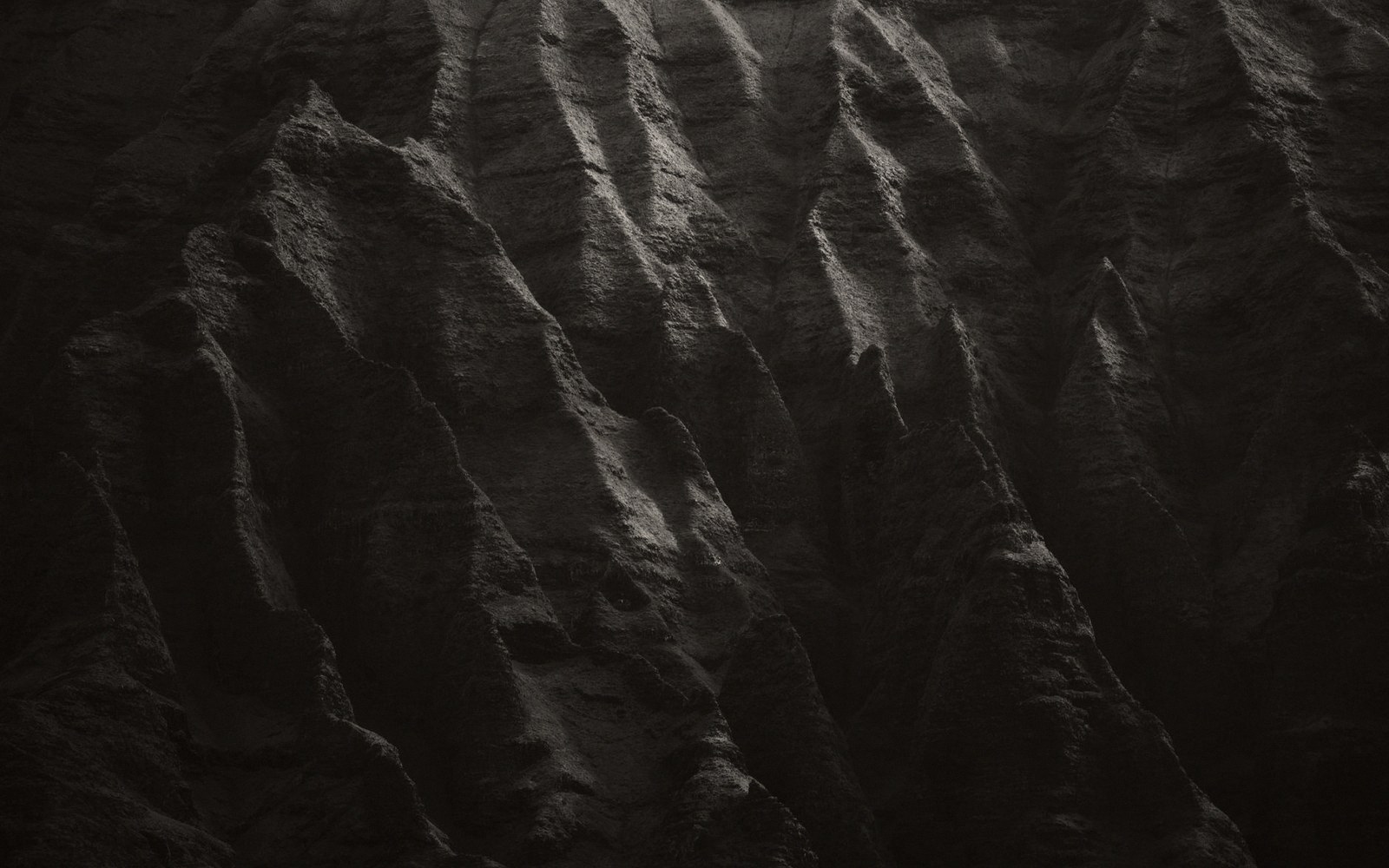
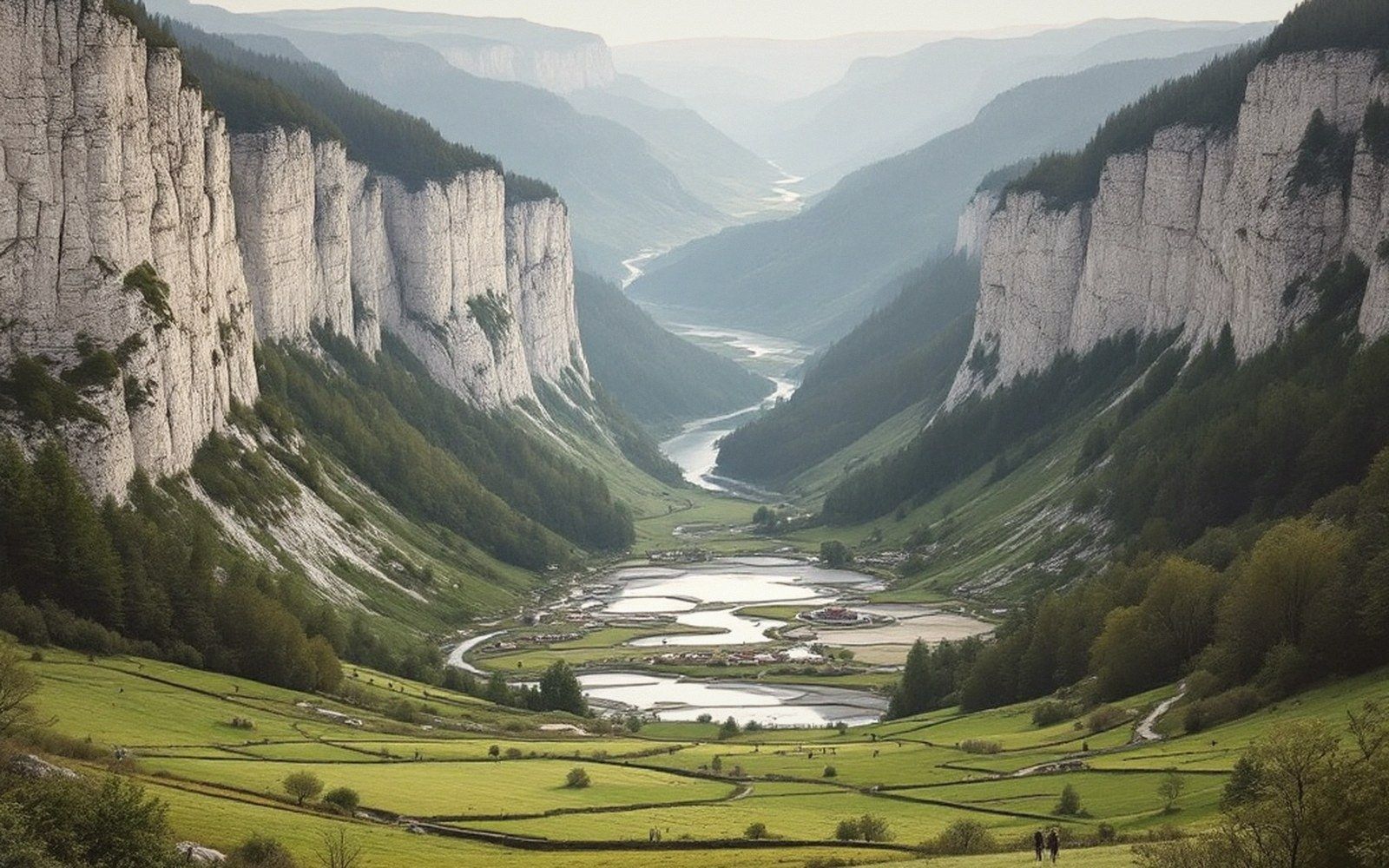
A reculée terminates not in a widening delta but in a wall. That wall — the cirque head, the closed end — is the most active surface in the whole landform. Stand anywhere else in the valley and what you see is history: benches and slopes shaped by processes that finished long ago. Stand at the cirque head and something is still happening.
The spring usually exits at the base of the cliff, or near it, because limestone stores and releases its water along the path of least resistance, and that path reaches daylight where the valley has cut deepest into the plateau. The discharge point is rarely a neat round opening; more often it is a fractured zone, a chaos of blocks and saturated debris where the exact orifice shifts with the season and the water table. In flood, the whole foot of the wall can weep; in a dry August, a single pipe might carry everything.
Field notes · Chronology of process
- Dissolution underground → water finds path to cliff base → spring emerges → undercutting begins → freeze-thaw works joints → block falls → cliff retreats → reculée lengthens; process is continuous, not staged
The cliff itself is another kind of instability. Limestone is strong in compression but the cirque head is undercut — by the spring at its foot, by freeze-thaw working the joints above, by the slow chemical dissolution that never stops. Blocks detach. Some are house-sized; some come as slabs; occasionally a section of overhang fails suddenly enough to leave a fresh scar that reads white against the grey and lichen-covered rock above it. The scree accumulating at the base is not random rubble — it is a record, boulder by boulder, of how the wall has retreated. The valley did not erode forward from a river mouth; it grew backward from this point, each collapse moving the head a metre or a few metres further into the plateau. The name reculée — from reculer, to go back — describes exactly this.
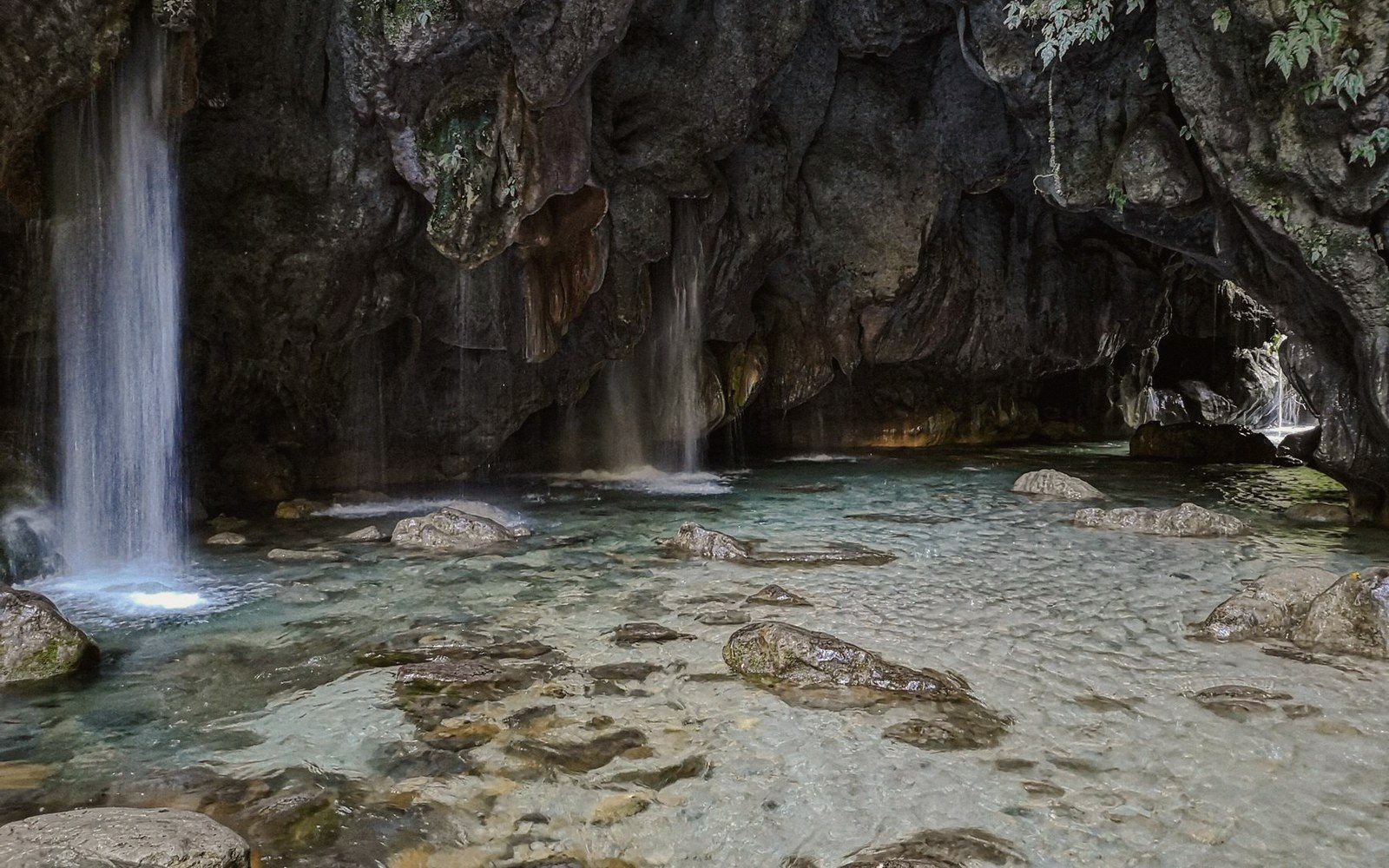
The geometry makes the floor damp and the cliff shaded. Cold air pools at the closed end; frost persists later in spring than it does even a few hundred metres down the valley. Where the spring's flow spreads across the floor it deposits tufa — calcium carbonate precipitating as carbon dioxide leaves the water — and in places that tufa has built up into small terraces and lip formations that look almost engineered. They are not. They are the residue of the same dissolution process that hollowed the rock in the first place, running in reverse once the water reaches open air.
Field notes · What to look for on the ground
- Spring orificefractured zone at cliff base, position shifts seasonally
- Tufa terracespale, porous carbonate platforms built by outflowing water
- Fresh scarbright white limestone where overhang has recently failed
- Scree aproneach boulder a collapse event; older blocks further from wall, moss-covered
The cirque head is, in this sense, both the source and the product of the whole system: the place where karst water arrives, where the rock is actively consumed, and where the valley itself is made.
Keep following the water