Scree and retreat
The rubble at a reculée's closed end is not waste — it is a dated archive of the wall's collapse.
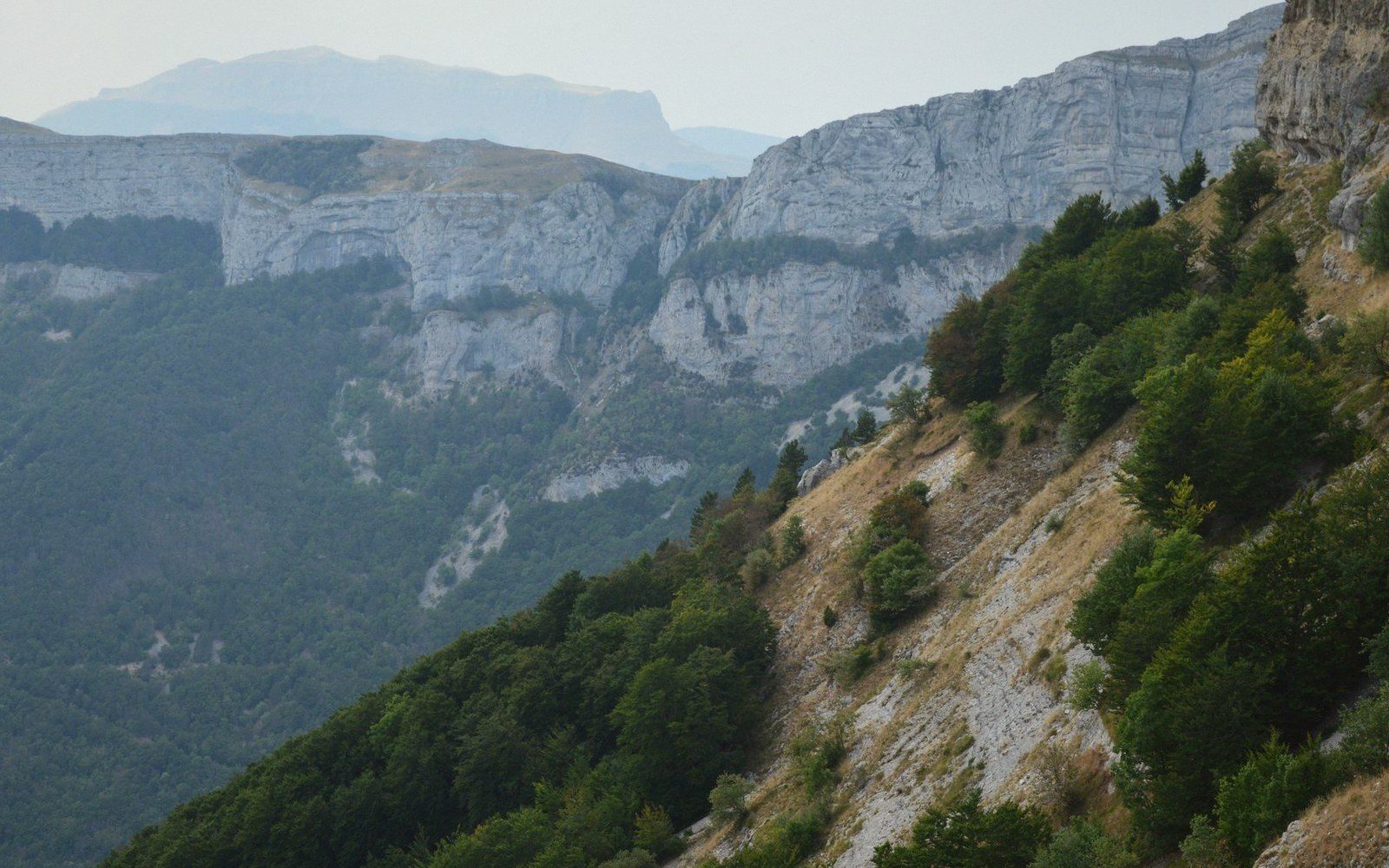
The apron at the foot of the cliff
Stand at the head of any reculée and the ground rises toward you before the cliff begins. That incline is scree — angular limestone fragments, unrounded because they have not travelled, still sharp from the freeze-thaw cycles that split them off the face above. Each fragment is a small event: water crept into a fissure, froze, expanded fractionally, and prised a slab loose. Over centuries the slabs accumulate.
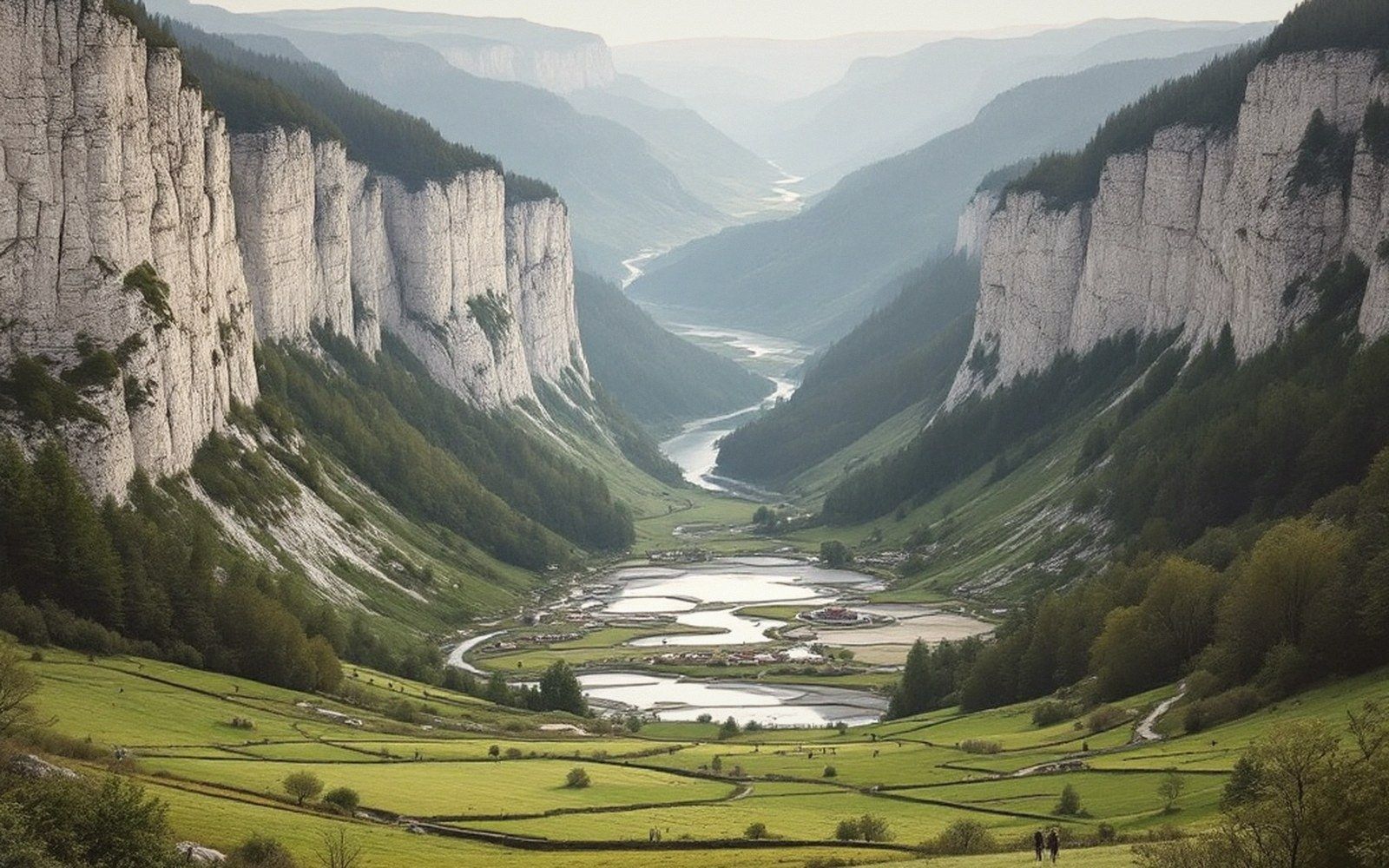
The angle at which scree stabilises — roughly thirty to thirty-five degrees for dry limestone rubble — is set by friction between fragments. Material added to the top of the slope slides until it finds that equilibrium, so the profile of the apron stays consistent even as its volume grows. The cliff retreats, the apron advances, and the floor of the valley gradually rises behind it.
This is how a blind valley cuts backwards: not by a river eroding headward in the conventional way, but by the physical collapse of the wall at the cirque head. The spring that usually exits at the base of that wall is what keeps the rock saturated and therefore vulnerable; frost does the mechanical work, and gravity does the rest. Remove the spring and the freeze-thaw weathering slows; the retreat rate drops.
Field notes · What the scree records
- Fragment shapeangular, unrounded, because transport distance is effectively zero
- Angle of reposeroughly 30–35° for dry limestone rubble; self-regulating profile
- Stratigraphyburied layers reflect cold/warm periods; thicker beds = more intense frost-shattering
- Retreat mechanismspring saturation + freeze-thaw + gravity; not conventional fluvial headward erosion
What gives the apron its value as a record is that older material lies buried beneath newer falls. Where erosion exposes a cross-section, or where archaeologists dig test pits, the stratigraphy reads like a rough diary: thicker beds correspond to cold periods when frost-shattering was intense, thinner beds to warmer intervals. The cliff is always losing ground, but not at a steady pace — the scree remembers the accelerations.
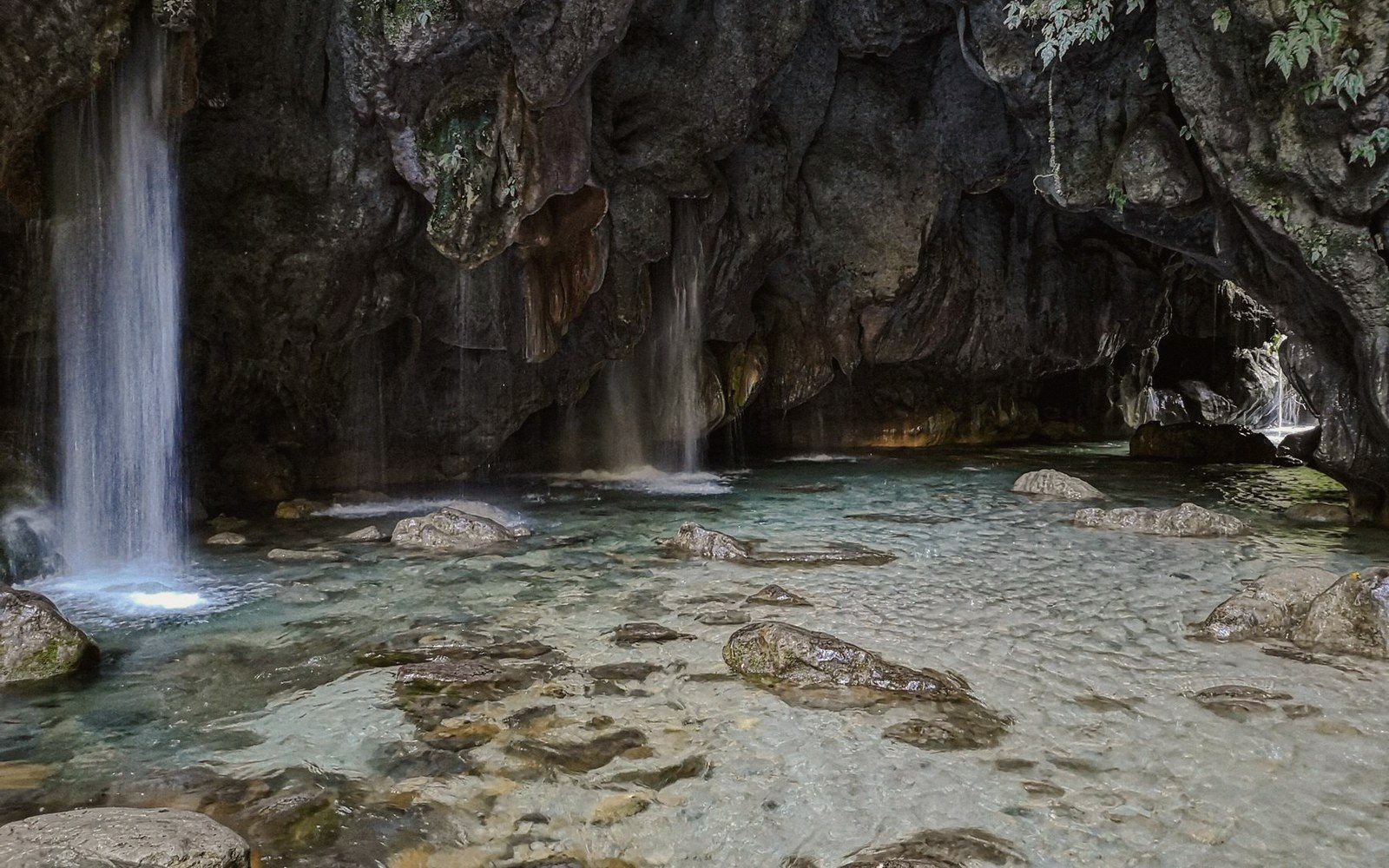
The wall looks permanent. The rubble at its foot is evidence that it is not.
Keep following the water