The rock is the reservoir
Limestone stores rain in fissures and gives it back at a spring, so the flow answers the weather with a delay measured in days.
Why limestone springs run late, not dry
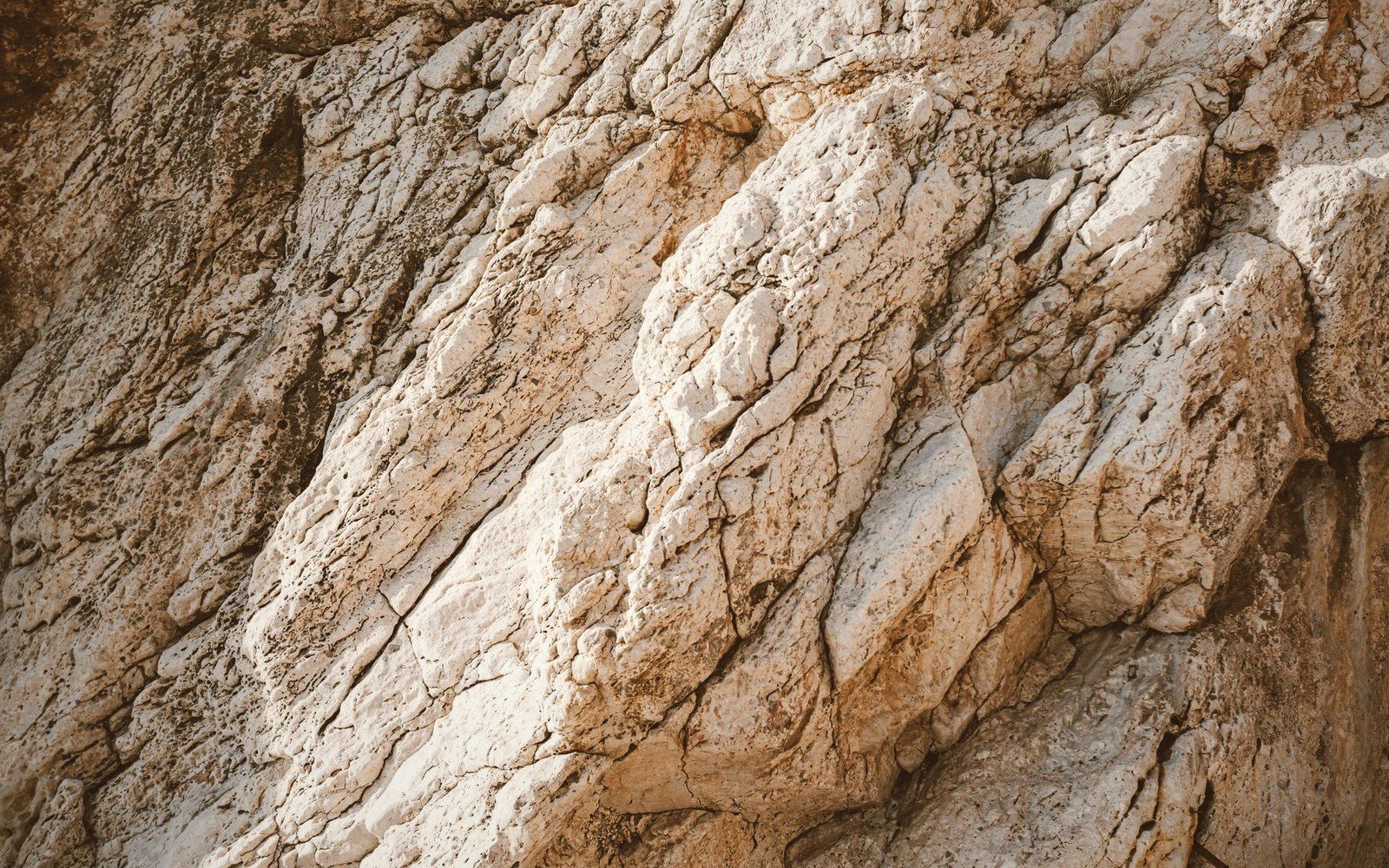
A limestone plateau looks impermeable. Stand on the surface and you find no rivers, sometimes no soil worth mentioning — just grey rock cracked into irregular slabs, with the wind moving across it and nothing to say where the rain goes. It goes down. Every joint, every bedding-plane parting, every solution-widened fissure accepts water and routes it into the dark, and the plateau becomes, in effect, a tank.
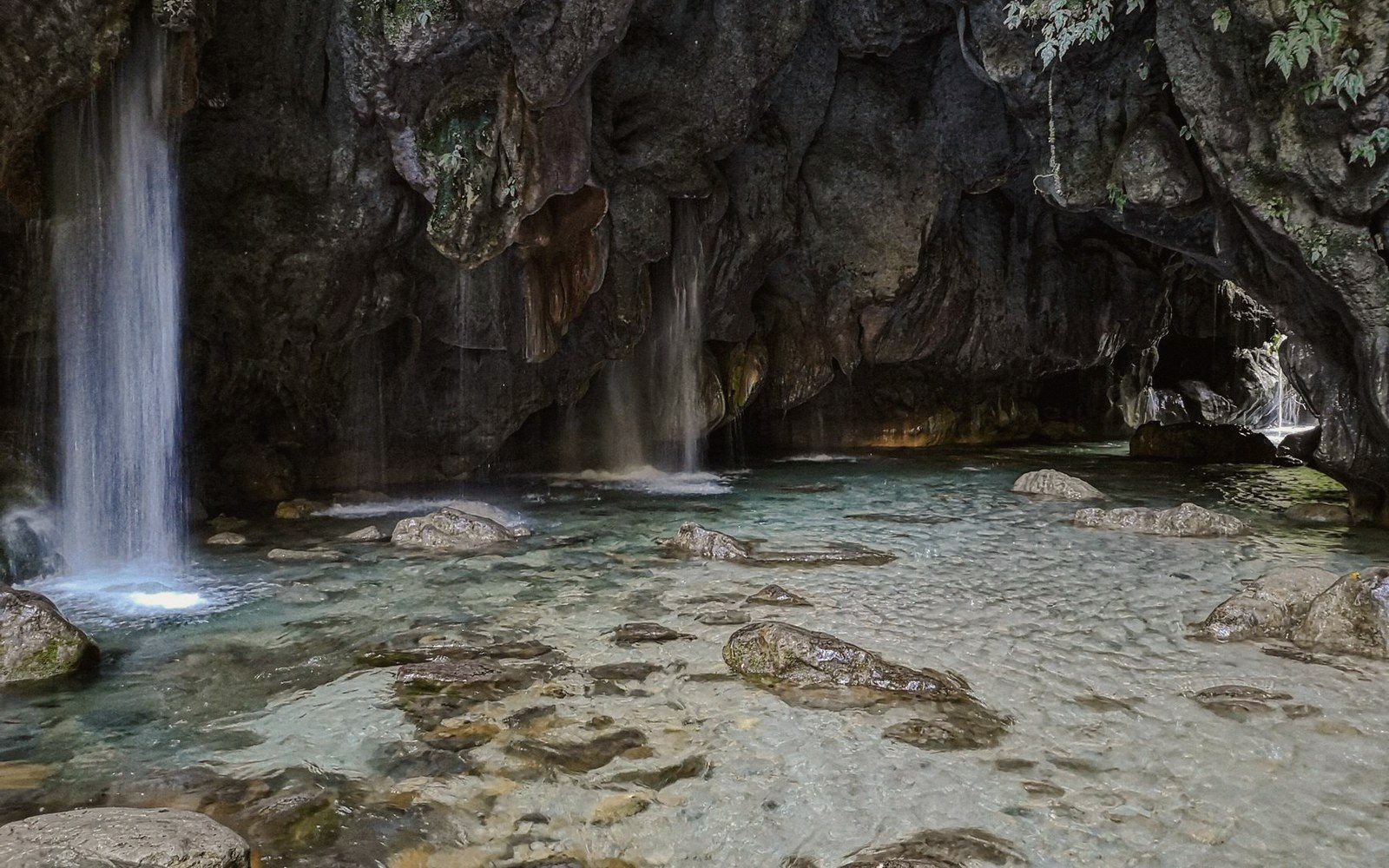
The tank is not a simple void. Water moves through limestone by what hydrologists call secondary porosity: not the tiny pores between mineral grains, which in dense limestone amount to almost nothing, but the network of fractures and conduits that dissolution has enlarged over thousands of years. Some of these are tight and slow; others are open tubes that carry water almost as quickly as a surface stream. The result is a reservoir with two speeds inside it. A hard rain reaches the spring fast through the open conduits — a pulse that arrives in hours or a few days. The same rain also charges the surrounding fissured rock, and that water drains slowly, taking weeks or months to appear at the resurgence.
What comes out, and when
This two-speed behaviour is what makes a karst spring distinctive. In a catchment underlain by clay or impermeable granite, rain becomes river quickly and the hydrograph — the graph of flow against time — spikes sharply and then falls. A karst spring's hydrograph has the same initial spike, but behind it comes a long, gentle tail: the slow drainage of the fissure store, the matrix reservoir bleeding out through the conduits. A good spring does not run dry in a dry summer because it is still releasing water that fell as rain months earlier, or as snow that melted slowly into the plateau the previous spring.
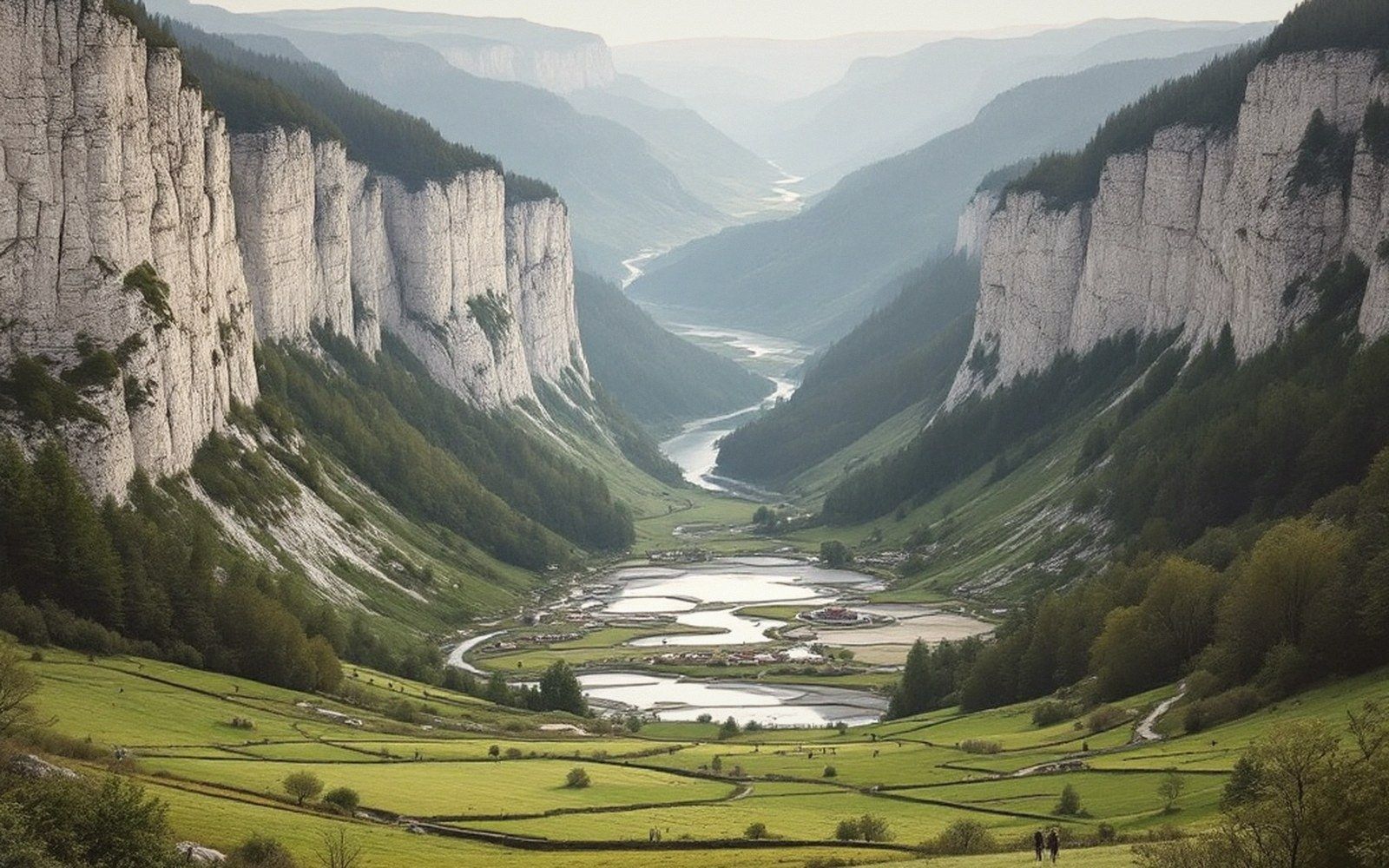
The delay has a practical consequence that shaped where people chose to live. A spring fed purely by surface runoff would fail within weeks of a drought. A karst spring drawing on a large fissured catchment keeps flowing — at reduced volume, but flowing — because the rock itself is still giving back what it held. Villages along the reculée floors, the steep-sided blind valleys that cut back into the Jura plateau, were built at the point where the spring emerged, not because the site was otherwise convenient, but because the water was reliable in a way that a surface stream was not.
The size of the catchment matters, but so does the geometry of the conduit network. Where dissolution has connected a large area of plateau to a single outlet, the spring behaves like a proper reservoir: high steady flow, slow response to individual rain events, good drought performance. Where the network is simpler and the conduits short, the spring is more reactive — quick to rise, quick to fall — and less dependable through a dry spell. Dye-tracing experiments, in which fluorescent tracers are introduced at swallow holes on the plateau and timed to their emergence at springs below, reveal which catchments are well-connected and which are fragmented.
Temperature is a quieter indicator than flow. A reactive spring — mostly conduit-fed — carries water close to the air temperature of when it fell. A spring draining deep, slow-moving fissure storage delivers water at something much closer to the mean annual air temperature of the region: cool and almost constant year-round, because the rock itself buffers it. That constancy is the same principle that keeps wine and cheese in good condition in a cellar cut from the same limestone: the rock is indifferent to seasons.
Field notes · Key mechanisms
- Secondary porosityfractures and dissolved conduits, not grain-to-grain pores
- Fast pathwayopen conduits: response in hours to days
- Slow pathwaytight fissures: response in weeks to months
- Dye tracingtracer injected at a swallow hole, timed at the spring; reveals conduit connectivity
- Hydrographgraph of spring flow against time; shape distinguishes conduit-dominated from matrix-dominated systems
- Mean annual temperaturethe temperature a deep fissure-fed spring converges on, roughly 10–12 °C in the Jura
The plateau, then, is not a barrier between rainfall and river but a transformer: it takes irregular weather — heavy rain, summer drought, winter snowpack — and returns something steadier. The spring at the head of the valley is not the beginning of the water system. It is the end of a long, invisible journey through rock, and the shape of that journey, carved by chemistry over millennia, decides how much comes out and when.
Keep following the water