Swallow holes
Where a stream runs out of surface and drops into the dark
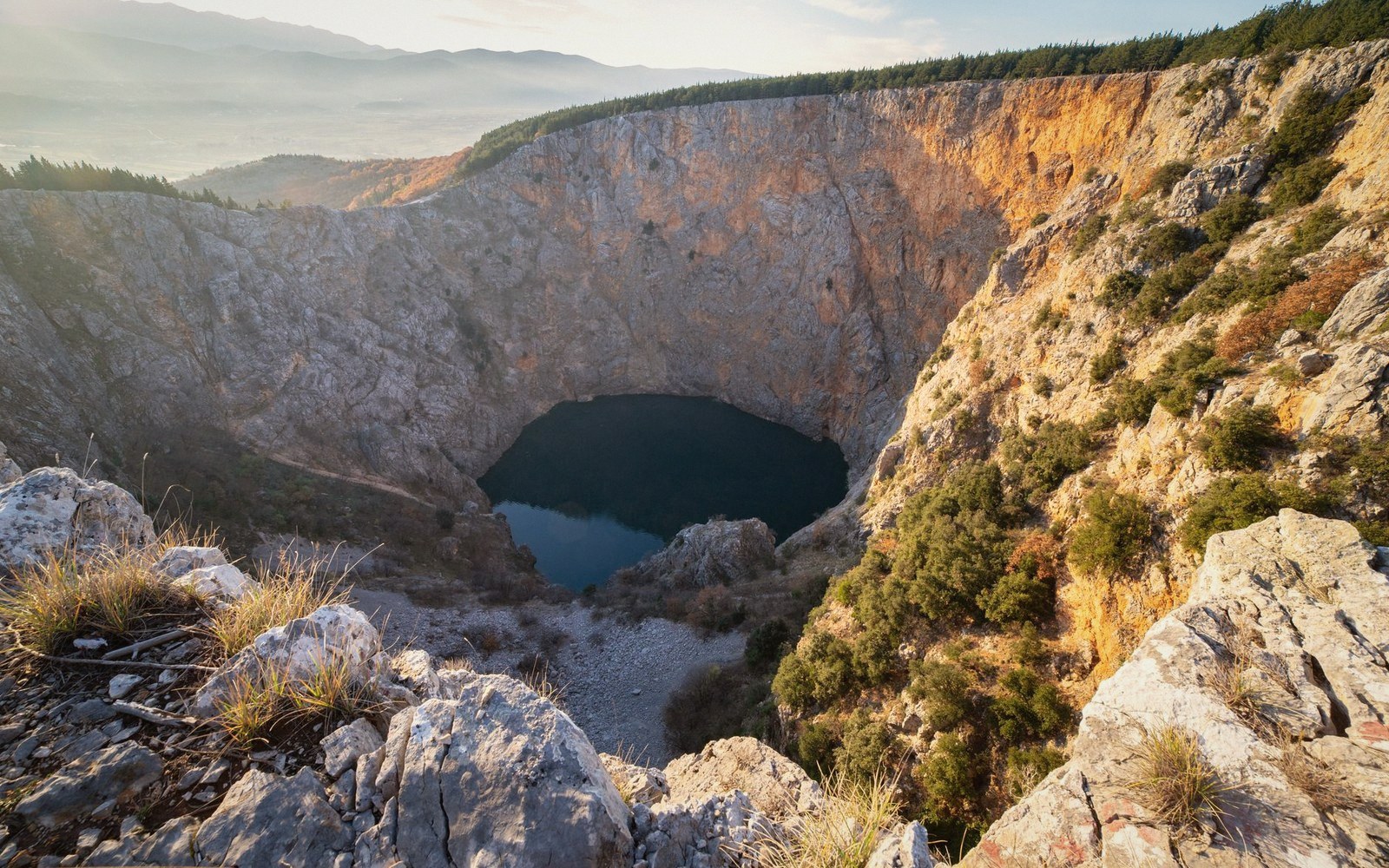
Where the water leaves
A swallow hole — sometimes called a sink, sinkhole, or, in Balkan karst terminology, a ponor — is the point where a surface stream simply disappears. The channel runs downslope in the ordinary way, then encounters a joint, a fissure, or a collapse hollow in the limestone and feeds itself underground, leaving a dry bed beyond.
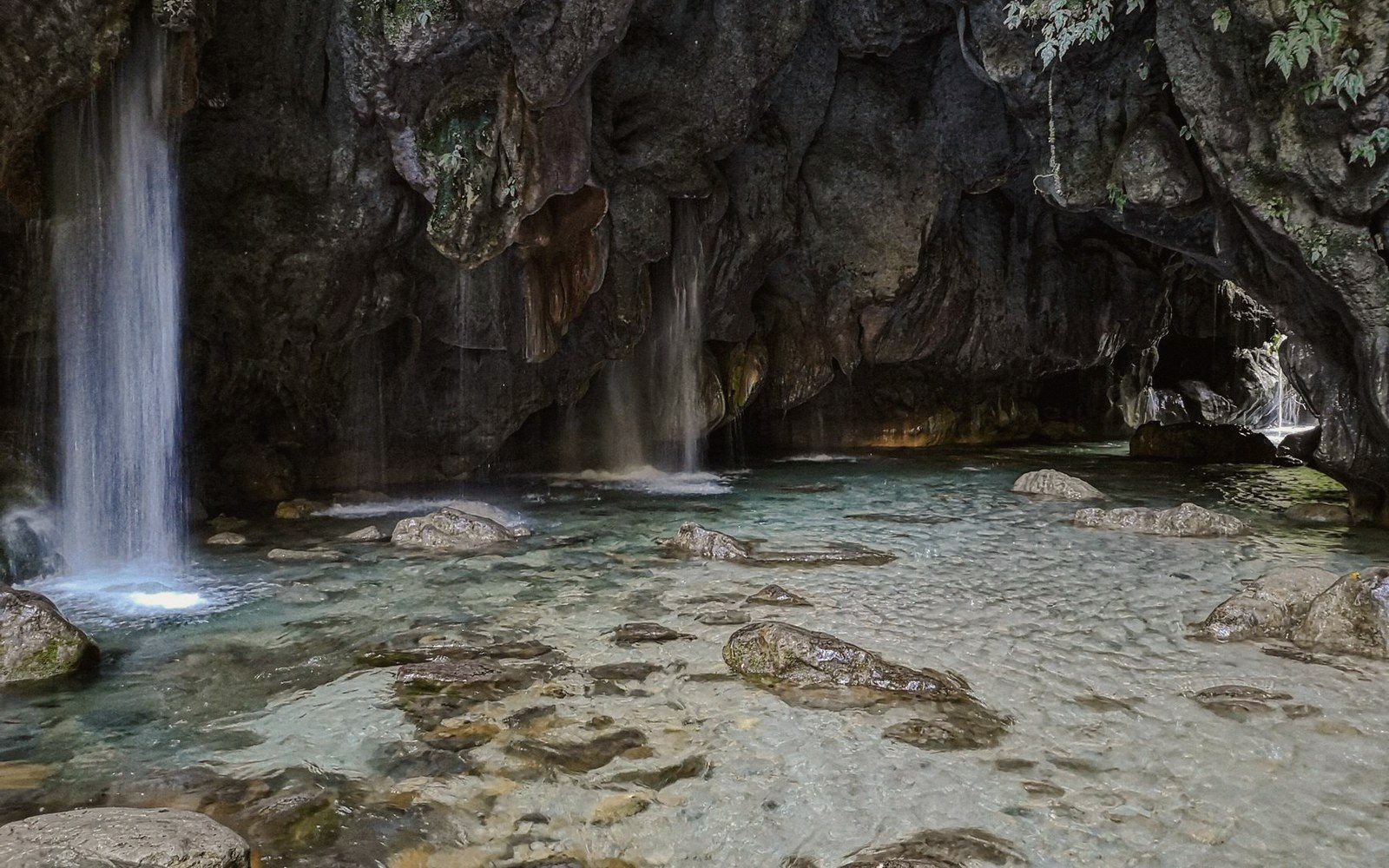
The mechanics depend on which way the geology tilts. Where a stream crosses from impermeable rock onto limestone, the water that could not sink before now finds infinite opportunity: the limestone is laced with solutional passages widened by centuries of slightly acidic water working along bedding planes. The stream probes the most open joint, gradually enlarges it by dissolving carbonate from the walls, and eventually captures the full flow. In wet seasons the capacity can be outrun — water backs up and spills across the surface — but in normal conditions the channel ends at the swallow hole as if cut with a knife.
The passage that follows is invisible and often complex. The water does not fall straight to a resurgence; it moves through a network of conduits, sometimes storing in flooded chambers, sometimes emerging briefly into air-filled galleries. Tracing that path is the work of dye tracing — adding a fluorescent dye at the swallow hole and watching for it at every candidate spring downslope and sometimes far across the plateau. Results routinely surprise: the underground route bears no relation to surface topography, and one swallow hole may feed two separate springs depending on water level.
Field notes · Chronology of process
- Jointing and fracturinginitial limestone structure that makes sinking possible
- Solutional wideningacid water enlarges fissures over centuries
- Stream capturefull flow diverted underground, surface channel abandoned
- Conduit developmentunderground network matures
- Roof collapsecavity ceiling fails, swallow hole widens or deepens suddenly
Swallow holes are not static features. The collapse that opens one can deepen as the roof of an underlying cavity fails progressively. A funnel widens, sediment accumulates and periodically flushes through. Trees on the rim lean inward. Occasionally a larger roof fails all at once, producing a sudden depression tens of metres across — alarming if it happens beneath pasture or road.
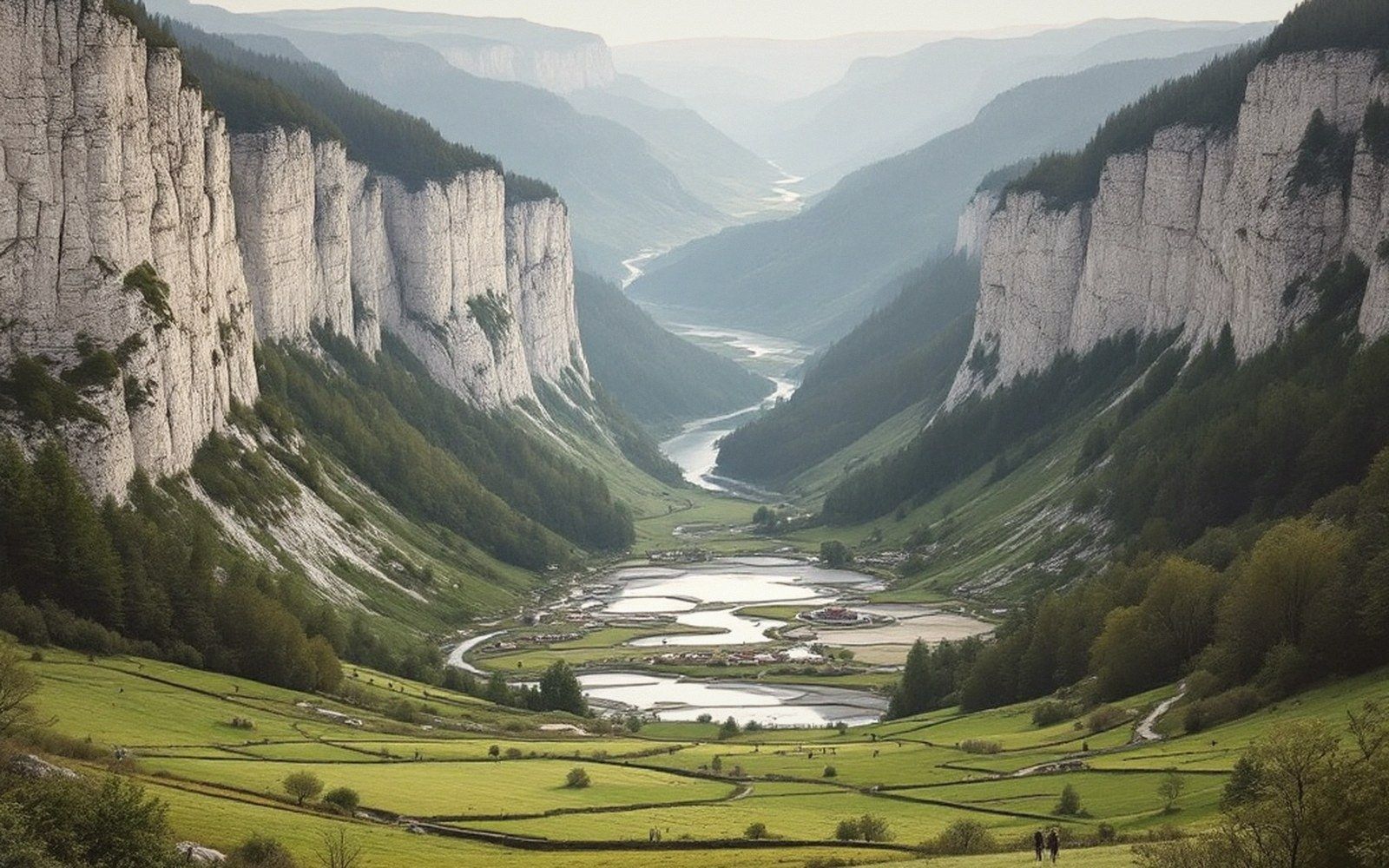
What remains at the surface, downstream of the swallow hole, is a dry valley: a fully formed channel with no water in it, which records the stream's former course before the limestone took over. The valley is real; the river is gone. The limestone is the reservoir now, holding what was once visible and returning it, on its own schedule, somewhere else entirely.
Keep following the water