Flood response
A karst spring can go from trickle to torrent in hours. The geology that stores water so efficiently also releases it with almost no warning.
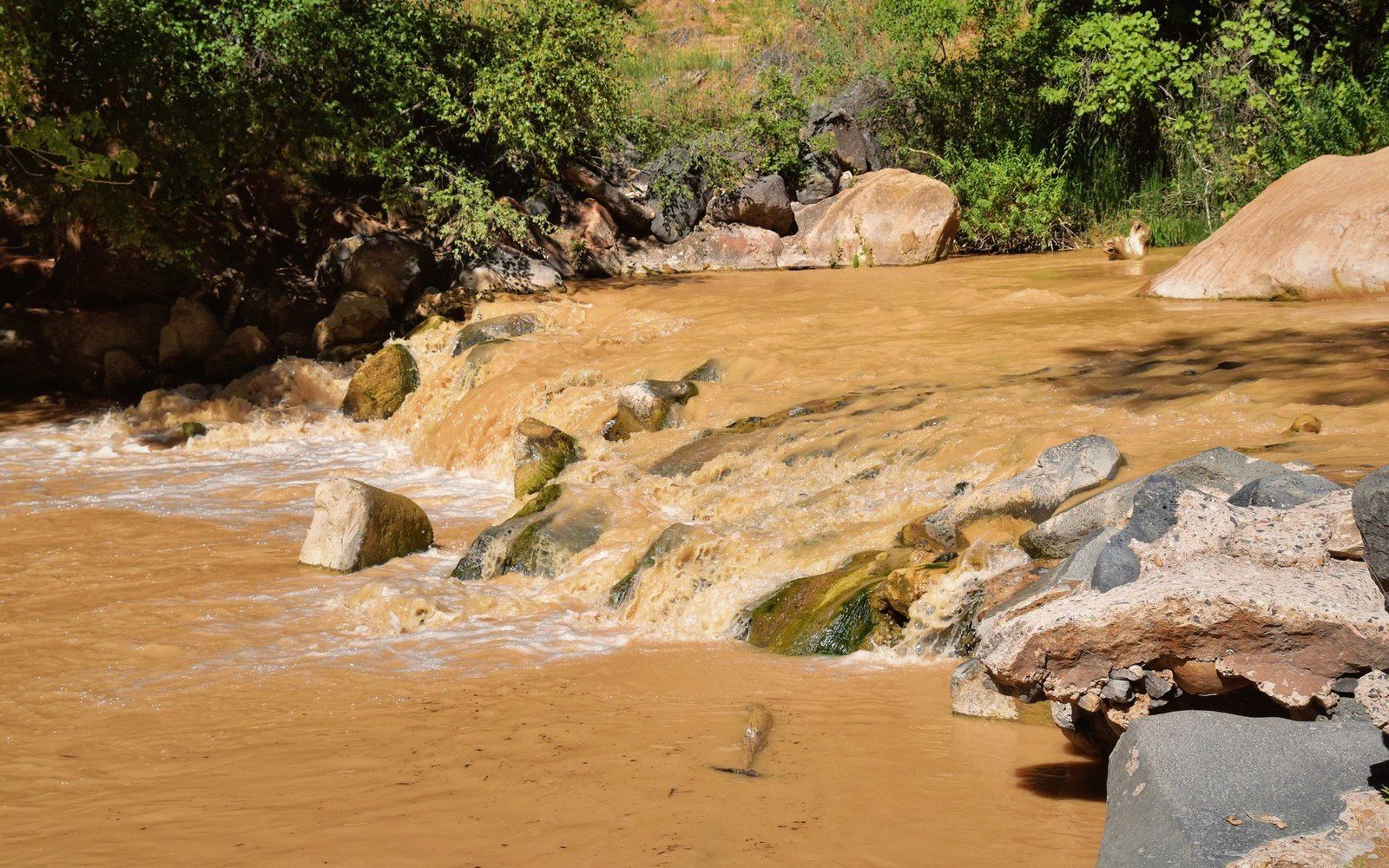
When the limestone lets go
Rain falling on a karst plateau does not behave like rain on clay or granite. It finds cracks, enters joints, and drops rapidly through a system of fissures and conduits that can move water at speeds a surface catchment would never achieve. The rock is the reservoir, and it is a reservoir with a trapdoor.
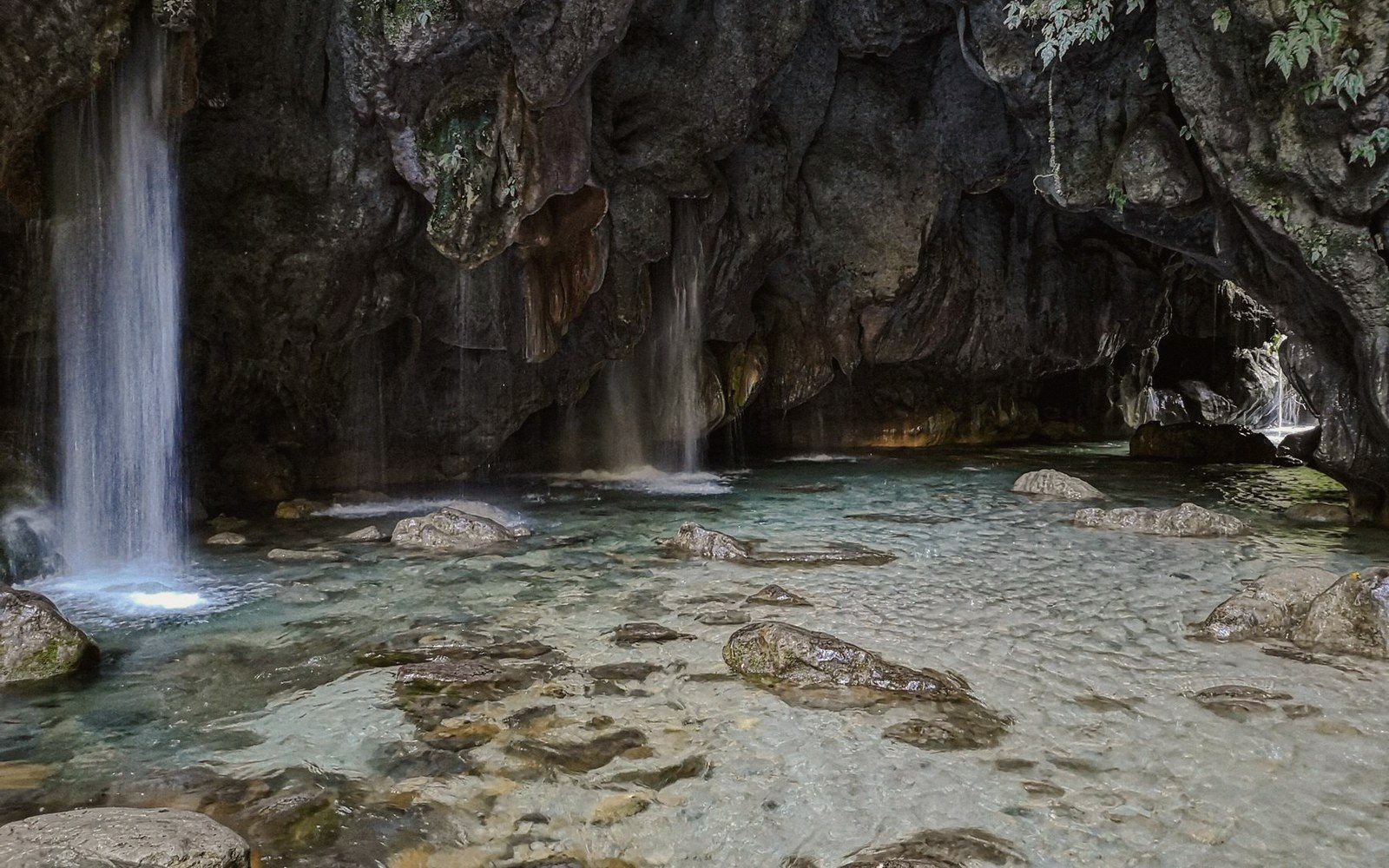
Under normal conditions, a karst spring yields a modest, steady baseflow — water that has taken weeks or months to percolate through the finer joints of the limestone matrix. But the conduit network that connects swallow holes on the plateau to the spring at the valley head is a fundamentally different pathway: faster, larger, far less filtered. After heavy rain or rapid snowmelt, this conduit system fills quickly. When it reaches capacity, the spring transforms.
Field notes · Key behaviour
- Baseflowthe slow, steady output between flood events, fed by fine-matrix percolation
- Conduit flowfast, direct transport through open fissures and cave passages; responsible for flood pulses
- Rising limbthe steep upward slope of flow on a flood hydrograph; dramatically short in karst
- Turbidity pulsethe flush of suspended sediment that arrives with or just ahead of peak flow, a diagnostic sign of conduit-dominated drainage
The response can be violent. Flow rates that multiply tenfold or more within a few hours are well documented at French Jura springs. The water arrives turbid — clay and fine sediment from the conduits — and cold, delivered with almost none of the buffering that a surface river's catchment would provide. At springs that feed established watercourses, this surge propagates downstream immediately.
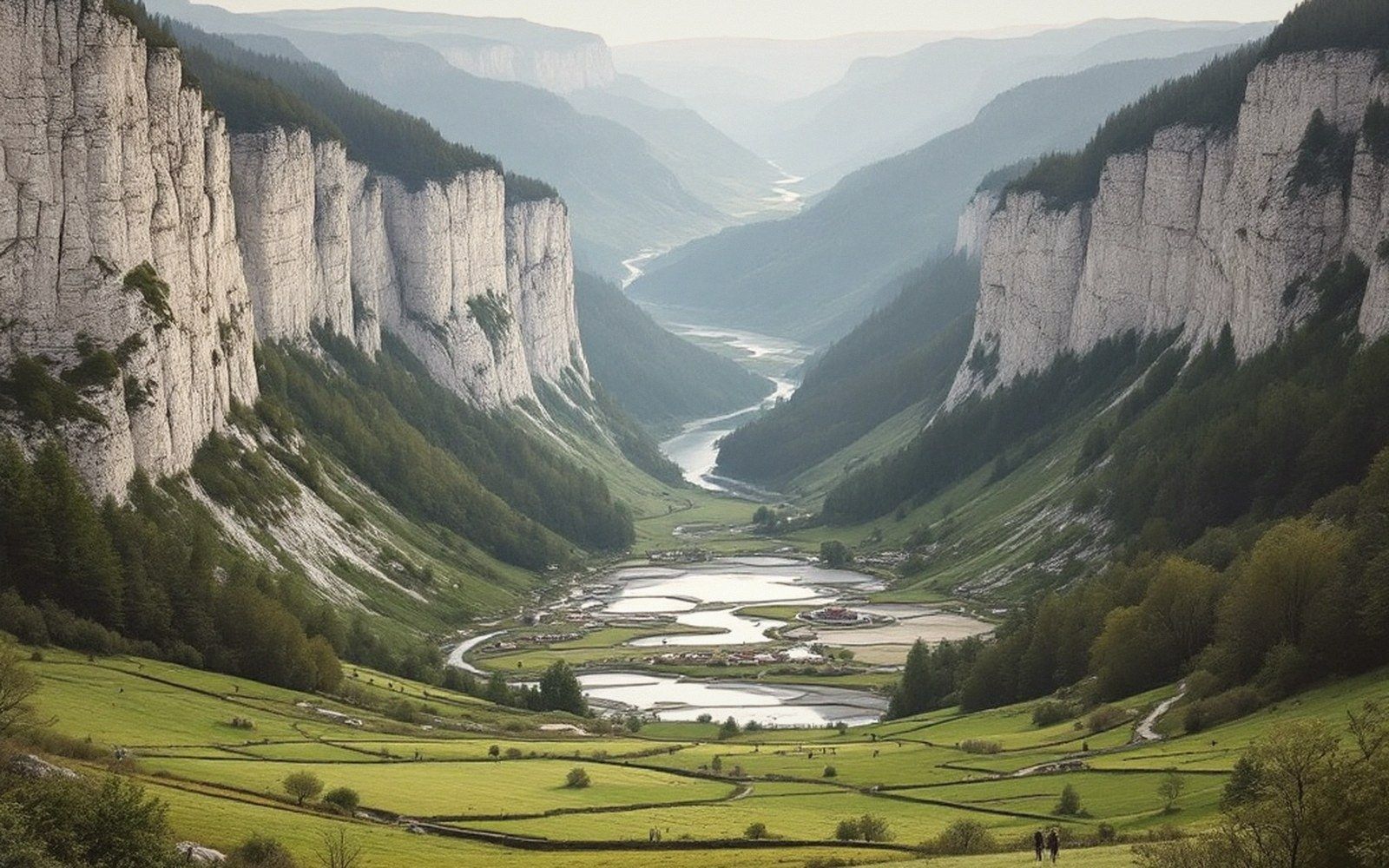
The communities historically settled around karst springs understood this, even without a word for it. A valley that cuts backwards, confined between limestone walls, gives the floodwater nowhere to go. The reculée geometry that sheltered a village from wind could funnel a surge with nowhere to dissipate laterally. Mills, tanneries and small forges built close to a reliable spring flow were, by that same logic, built close to the most unpredictable watercourse in the region.
Flood hydrographs at karst springs have a characteristic shape: the rising limb is abrupt, the peak is short, and recession falls steeply before settling back toward baseflow. The interval between rainfall and peak discharge at the spring reflects the conduit length and gradient, and varies by site — but in the Jura it is rarely the comfortable lag that gives a drainage authority time to act.
Field notes · Chronology of the surge
- Rain or snowmelt enters swallow holes on the plateau
- Conduit system fills, sometimes within hours
- Spring output multiplies; water arrives cold and turbid
- Sharp peak, then rapid recession back toward baseflow
What the geology gives with one hand it takes back with the other. The same porosity that makes limestone a reliable long-term water store is the reason a karst spring, in a wet autumn or a warm March, becomes briefly something else entirely.
Keep following the water