Grey marl
The clay beneath the limestone edge holds water and warmth differently, which is why the vines are where they are.
The layer that changes everything
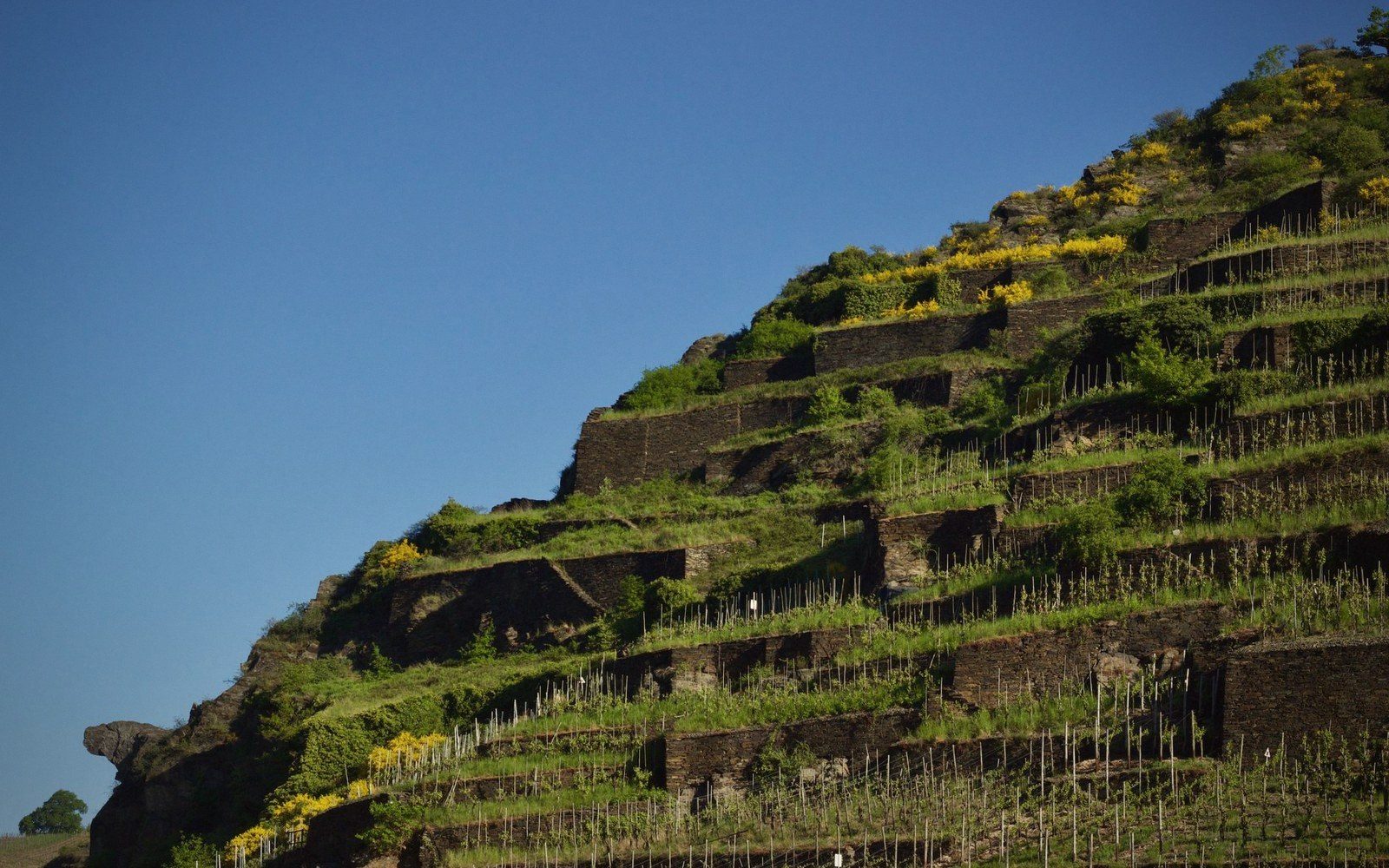
Beneath the limestone plateau of the Jura, before the rock rises to form its escarpment, there is a band of softer ground that most visitors walk over without noticing. It shows in road cuts as a pale blue-grey smear, crumbling at the edge where it weathers. Geologists call it marl — marne in French — a mix of calcium carbonate and clay in proportions that vary enough to matter. Here it is dominantly the Upper Jurassic marls, Oxfordian in age, formed when a shallow sea laid down fine sediment between episodes of reef-building. Where the reef limestone is hard and permeable, the marl beneath it is soft and nearly impermeable, and that single difference shapes what grows on this hillside.
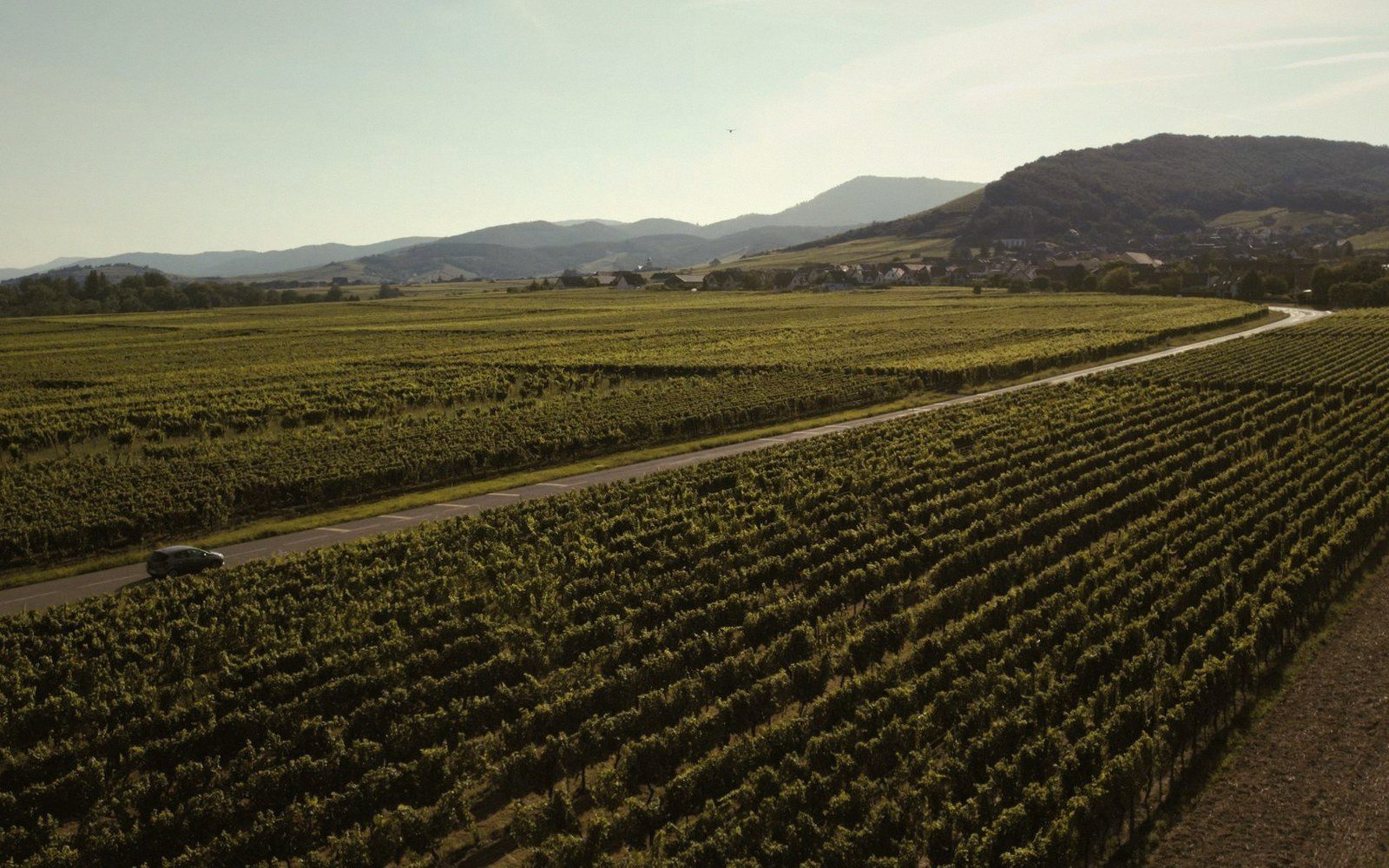
Water behaves differently in these two materials. Rain that falls on the limestone plateau above finds fissures immediately and moves underground, reappearing kilometres away at a karst spring with little interaction with the surface. But rain that falls on the marl cannot penetrate past the clay fraction. It moves laterally, slowly, staying in the root zone long enough to be useful. This is not a trivial distinction. Vines are drought-tolerant but not drought-indifferent; they make their best fruit when they work for water — when the roots are forced deep but not denied entirely. The marl delivers exactly this, releasing moisture gradually through a dry summer, never waterlogging in winter because the slope sheds excess downhill. The limestone cliff above provides the backdrop; the marl at its foot provides the growing medium.
What the clay does for heat
Marl absorbs heat differently from sand or gravel. Its specific heat capacity is lower than water and higher than pure chalk, and the clay particles hold warmth through the night in a way that pure limestone debris does not. In a region where the growing season is marginal and late frosts are a real threat, this matters. The east-facing and southeast-facing slopes of the Jura's scarp are already favoured for aspect — morning sun warms them earliest — but the marl amplifies that advantage by holding residual warmth into the evening.
Field notes · What the marl is, physically
- Marla mixture of calcium carbonate and clay; here predominantly Oxfordian in age, laid down in a shallow Jurassic sea
- Clay fractionthe component that makes marl impermeable and gives it its water-retaining and heat-holding properties
- Terracettessmall natural step-like features in the turf where marl has crept slowly downhill under gravity
- Specific heat capacitya measure of how much energy a material stores per unit of temperature rise; relevant to night-time warmth retention on the slope
The grey-blue colour itself plays a role. Pale rock reflects solar radiation; dark clay absorbs it. Jura marl sits somewhere between, but in spring, when stored warmth most matters, the marl slope will accumulate heat that a lighter substrate sheds. Vine growers in the Jura have worked this ground for centuries without necessarily naming the mechanism, but the positioning of the best parcels consistently follows the marl outcrop along the slope. Above, on the plateau, the rock is too thin and the drainage too rapid; below, in the flat valley floor, cold air pools overnight and frost settles. The marl band in between is a thermal corridor as much as a soil type.
Iron, structure and what lives in it
Jura marl is often iron-rich, which gives it a slightly rusty tinge in drier weather and contributes to the characteristic mineral quality associated with wines grown on it. The iron has no direct biochemical function in the vine's fruit production, but the soil structure that iron-bound clay produces — granular, friable, with good aggregation — allows root penetration while retaining enough structure to prevent compaction. This is the physical quality that growers prized before anyone measured mineral content.
The biological life of the marl is also distinct. Clay-rich soils support different fungal networks than limestone rubble does, and the bacterial activity that mineralises organic matter runs at a different rate. The result is that marl soils tend to express themselves slowly in the vine — young plantings take years to begin showing the soil's full character, and old vines on marl are disproportionately valued, because the root system has had decades to explore the stratigraphy below.
Field notes · Key contrasts (plateau vs. marl band vs. valley floor)
- Plateau limestone: rapid drainage underground, thin soil, too dry for vines
- Marl band mid-slope: slow lateral drainage, root-depth moisture, heat retentionthe productive zone
- Valley floor: flat, frost-prone, cold air poolingmarginal for viticulture
What the marl is not is easy to work. It clogs machinery when wet, dries to a near-brick surface in August, and creeps downhill over decades under the pull of gravity. The lower edge of many parcels shows subtle terracettes — small, natural steps in the turf — where the marl has moved. Tending vines on it has always been labour intensive, and the slope as a vineyard is partly a story about this specific material: what it gives and what it demands back.
Keep following the water